Resilient Supply Chains
Farmers & Food Industry Tackle the Shared Challenge of Climate Change
At the end of the conference, participants had gained greater understanding of the challenges climate change brings for their companies - and how they can seize the opportunity to build resilient supply chains.
View session details
View session details
View session details
View session details
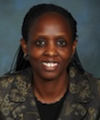
President, Alliance for a Green Revolution in Africa (AGRA)
As President of AGRA, Dr. Kalibata leads the organization’s efforts with public and private partners to ensure a food secure and prosperous Africa through rapid, sustainable agricultural growth, improving the productivity and livelihoods of millions of smallholder farmers. Prior to joining AGRA in September 2014, Dr. Kalibata was Rwanda’s Minister of Agriculture and Animal Resources (MINAGRI). In this role, she was widely considered to be one of the most successful Agriculture Ministers in sub-Saharan Africa. Dr. Kalibata has held several other leadership positions, including Permanent Secretary of Ministry of Agriculture and Deputy Vice Chancellor of University of Rwanda. She also worked for the International Institute of Tropical Agriculture in Uganda, and various other agricultural development organizations. She sits on various boards including the International Fertilizer Development Corporation (IFDC), Institute of Agriculture and Animal Husbandry, the Strategic Advisory Council of the International Food Policy Research Institute (IFPRI) and the Sustainable Trade Initiative (IDH). Dr. Kalibata has a distinguished track record as an agricultural scientist, policy maker and thought leader. She holds a doctorate in entomology from the University of Massachusetts, Amherst.
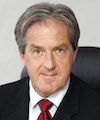
Chief Executive, Bord Bia (Irish Food Board)
Aidan Cotter was appointed Chief Executive of Bord Bia, the Irish Food Board, in July 2004 and brings to the position a wealth of knowledge and experience in food marketing. Mr. Cotter previously served in Bord Bia as Director of Operations for a number of years, and earlier gained extensive experience in the marketplace as the organisation’s European Director, based in its London office, and prior to that in Dusseldorf. Mr. Cotter holds an MBA from Cranfield School of Management in the UK and has Masters degrees in Economic Science and Agricultural Economics from University College Dublin (UCD). In September 2013, he was awarded an Honorary Degree of Doctor of Law from UCD.
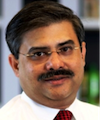
Vice President Procurement Chemicals, Unilever, Co-Chair, Roundtable on Sustainable Palm Oil (RSPO)
Biswaranjan Sen is a Chemical Engineer by training. He joined Unilever in 1991 and has worked in R&D; and across various parts of the supply chain including manufacturing, planning, logistics and customer service. Between 2009 and 2012 he was a member of the Board of Directors of Unilever Indonesia with responsibility for the supply chain. He is currently the Vice President Procurement Chemicals at Unilever and Co-chair of RSPO.
Climate Change Advisor, National Farmers Union
Ceris Jones is the NFU’s climate change advisor. She has a background in national and international research and industry, covering agricultural and environmental issues and has been with the NFU for seven years working on all aspects of climate change. She is the NFU’s representative on the agriculture industry’s Green House Gas Action Plan, the facilitator of the climate change working group of the World Farmers’ Organisation World Farmers' Organisation, and the Constituency Focal Point for the Farmers Constituency in the UNFCCC process.

Senior Vice President, Head of Corporate Responsibility and Sustainability, Olam International
Chris Brett was appointed as the Senior Vice President Head of Corporate Responsibility and Sustainability (CR&S;) for Olam International in 2007, and is a member of the senior leadership team. He has more than thirty years of experience working within the private, public and voluntary sectors in Africa, Asia and Latin America. Prior to working with Olam, he worked for 6 years in Central America as a Private Sector Development Advisor (1995-2001) for the UK's Department for International Development. From 2001 to 2007, he undertook a range of consultancies for a range of lead development organisations and the private sector, such as: the World Bank, IFC, African Development Bank, European Union, UNEP, commercial banks and infrastructural development companies. Chris has developed Olam’s CR&S; policies and practices and leads their integration into the company’s business product models. He holds a Master’s Degree in Management for Agricultural Development from Cranfield University in the United Kingdom. For further information on Olam’s approach to building sustainable supply chains please go to: http://olamgroup.com/sustainability/

Senior Director Sustainable Business, ASDA Stores
Dr. Brown worked in Government before joining the Meat and Livestock Commission as Beef Strategy Manager. He moved into retail as Agriculture Technologist with Marks and Spencer. He later joined ASDA as Agriculture Development Manager with a remit to developing ASDA strategies and activities across all sectors of agriculture. He became the Head of Ethical and Sustainable Sourcing, before being appointed to his present role in 2013. He is now in charge of covering waste, resource management, communications and sourcing.

Owner and General Manager of Omega Farms Plc.
Daniel Gad is the owner and general manager of Omega Farms Plc. a leading vegetable production farm in Ethiopia. Omega Farms is engaged in the production and sales of pre-packed exotic high value vegetables to the EU & UK markets. Omega Farms produces and distributes Sugar Snaps, Mange Tout and Baby Corn on a weekly basis during the season (from early October to end of May). Prior to returning to Ethiopia, Daniel Gad had a career in the telecom industry with AT&T; for 18 years. In his last assignment as Vice-President and Client Partner, he steered the development of AT&T; Solutions and secured a $1.6 billion outsourcing contract with JP Morgan. In 2003, Daniel Gad returned to Ethiopia where he was born and raised and established MetroLux Flowers, a company that produced and exported large T-Hybrid roses to direct high value markets in the EU, Russia, and the Middle East. He then divested his interest in MetroLux Flowers in order to concentrate on the development of Omega Farms. Most recently Daniel Gad led the national project funded by PepsiCo aimed at improving smallholder productivity in the production of Chickpeas. In addition to this he has been a speaker on the subject of PPP (public private partnerships) and participation of the private sector in aid effectiveness at the OECD, IMF and World Bank as well as at the Food Security and Nutrition forum of the G8 in Washington DC as well as the Global Forum for Agriculture (GFFA) in Berlin in 2013 & 2014. Mr. Gad currently serves as the Board Chairman of the Ethiopian Horticulture Cooperative and is an active member of the World Farmers Organization. Mr. Gad is a member of the high level leadership team of the New Alliance for Food Security and Nutrition. He was recently appointed to a three year term to the ACP EU follow-up committee of the EU parliament.

Head of Economic Justice Programme development, Oxfam GB, and OI Programme Development Coordinator, Oxfam International
David Bright career began as a Business developer, starting life with Unilever and finishing his commercial career over 12 years as a European business development manager in medium sized business. He is now head of economic justice progamming in Oxfam GB and co-ordinates work across the 17 Oxfam affiliates. He has supported Oxfams work in a range of African, Asian and Latin American countries, whilst leading their programme policy. His work and public speaking has focused on investment in agriculture, with an emphasis on smallholders in supply chains, womens empowerment, adaptation and the role of the private and public sector. This has meant developing and leading engagements with several companies ranging from Unilever to Vodafone. He has designed a number of Oxfam global programmes, including the Enterprise development programme (EDP) investing in producer owned agricultural trading and processing companies currently in 17 countries and our inclusive and sustainable agricultural market systems programmes (GEM) currently in 14 countries. He has written or commissioned various publications, most recently co-authoring “Think Big. Go small” a briefing for businesses on developing smallholder based supply chains and commissioning "Tipping the Balance" research on public policy to shape agricultural investment. David is on the advisory boards for Unilever and Sustainable Food lab, as well as a non-exec board member of a social enterprise.

Director General for Economic Development, UK Department for International Development
David Kennedy was appointed as the UK Department for International Development’s first Director General for Economic Development in June this year. He has worked on development finance, strategy and investment at the World Bank and the European Bank for Reconstruction and Development, he was most recently Chief Executive of the Committee on Climate Change, an independent advisory body to the UK Government and Devolved Administrations. He has a PhD in economics from the London School of Economics.

Chief Sustainability Officer Vice President, Health & Safety, Kellogg Company
Diane Holdorf is Vice President, Environment, Health and Safety, and Chief Sustainability Officer for Kellogg Company. She joined Kellogg in May 2008 as Senior Director, Environmental Stewardship and in 2009 was promoted to Vice President, Environmental Stewardship, Health and Safety. In 2011, she was promoted with the addition of Chief Sustainability Officer to her accountabilities. Ms. Holdorf leads development of the strategic direction on sustainability for Kellogg Company, focusing on responsible sourcing and conservation of natural resources across the Kellogg value chain. She leads global environmental stewardship to assure compliance with environmental regulations while working to reduce the total environmental impact of Kellogg Company operations. Prior to joining the company, Ms. Holdorf served as Vice President for Delta Consultants, a U.S. based environment, health and safety, and sustainability consulting firm. In addition to her role at Kellogg, Ms. Holdorf serves on the Executive Advisory Board of the Graham Sustainability Institute at the University of Michigan. She has also served as Secretary of the Board for Inogen Environmental Alliance, a global business of which Delta was a member. Most recently, Ms. Holdorf was recognized as a Maize and Wheat Super Woman by CIMMYT (International Maize and Wheat Improvement Center) as part of the United Nation’s International Women’s Day in 2015. Ms. Holdorf received Bachelor’s degrees in Public Communications and in German from Syracuse University.

Co-Chief Operating Officer, Programs, CDP
Frances oversees the delivery of CDP’s programs. Having spent eight years in the private finance sector, primarily at Dresdner Kleinwort's Global Equities Division, Frances joined CDP in 2007 to manage and expand the supply chain program. Frances sits on the board of EIRIS, an ethical investment organization. She holds an MSc in Environmental Technology from Imperial College.
Farmer, Plain City, Ohio, US
Fred Yoder is a 4th generation farmer who has lived and farmed near Plain City, Ohio for over 40 years. Along with his wife Debbie and his 2 children he grows corn, soybeans, and wheat on his farm of 1500 acres. He also has operated a retail farm seed business for over 35 years, and sells seed to all kinds of farmers including those who use biotech varieties, conventional varieties, and also to those who grow organic crops. Fred has served as President of the National Corn Growers Association (NCGA), which has over 40,000 dues paying members, and also represents over 300,000 corn farmers in the United States who support them with their check-off contributions. He served for many years in the Ohio Corn Growers Association in various leadership positions. He served as Chairman of the NCGA’s Biotech Working Group, which helped to develop protocols to ensure that new emerging technologies could be used safely on the farm while protecting other existing crop systems. Fred has traveled many times to the European Union to speak about co-existence of production systems, where both organic and other production systems can thrive side by side as neighbors. He is the chairman of the North American Climate Smart Agriculture Alliance (NACSAA), spending a great deal of time addressing the issues of climate change, conservation, and sustainability concerns.

Deputy Director of Procurement, United Nations World Food Programme
Mahadevan (Mack) Ramachandran is the new appointed Deputy Director of Procurement Division at the United Nations World Food Programme headquarters. He was previously Head of Strategy, Performance & Risk in Procurement, since Feb 2013. His main areas of work are on; optimizing sourcing/supply strategy for greater efficiencies & lowering risk, streamlining procurement process’s, and scaling up pro-smallholder procurement by connecting farmers to markets beyond WFP in a commercially viable manner. He has been with WFP for over 15 years, most recently in Sudan as emergency coordinator for North Sudan (ex-Darfur). He has held senior program/operations positions in North Korea, Panama, and Cambodia. He holds a Ph.D. in Economics from Clark University in the USA.
Adviser, Agricultural Risks and Markets, Agriculture Global Practice, The World bank
Marc Sadler is Adviser on Risk and Markets of the World Bank's Agriculture Global Practice. He is an expert on commodity markets, finance, logistics, trading and risk management, and regularly advises governments and supply chain stakeholders on these and related issues. Before joining the World Bank in Washington, D.C., Marc spent six years as a consultant for the World Bank and the Food and Agriculture Organization of the United Nations (FAO) in Central Asia, the Caucasus and Turkey. Prior to this, he spent nine years as a commodities trader (import and export), based out of the former Soviet Union. He has an M.A. in Jurisprudence from Trinity College, Oxford University.

Executive Vice President, Business Head Agriculture, HDFC Bank India
Michael Andrade is the Business Head for Agriculture, Commodities, Agri Supply Chain Business and Rural Financial Inclusion. He brings with him 27 years of banking experience including Branch Banking , Banking operations, Trade Finance, Corporate Finance, Co-operatives and Agricultural Finance. He has been with HDFC Bank since 1997 and in Agri–Rural business since 2001. HDFC Bank has one of the fastest growing Agri business in India. He has pioneered and developed the Agri-Value chain financing model for small holder farms. He is also a member of the Steering Committee at Agri-Fin of the World Bank Group based in Washington DC and a member on the Confederation of Indian Industry – Committee for Food Processing , in Delhi an industry body supporting the Ministry of Food processing. Considered a thought leader in this segment he is a regular speaker at Workshops, Conferences and Academic Institutions in India and abroad, and also a Resource Person for the College of Agricultural Banking of the Central Bank ( The Reserve Bank of India ). He holds Bachelor’s Degree in Science and a Masters in Finance from the Mumbai university. Prior to HDFC Bank, he worked with the Mumbai branches of Abu Dhabi Commercial Bank and Barclays Bank. He is currently based at the banks Head Quarters in Mumbai, India. HDFC Bank, recently awarded Asia’s Best Bank 2015 – by Finance Asia and Top 50 Most Valuable Indian Brands study by Millward Brown.

Senior Director of Global Public Policy, Mars Incorporated
Michael joined Mars in November of 2008 from the Pew Initiative on Food and Biotechnology, where he served first as Director of Science and then as Executive Director. He was the Initiative’s primary public spokesperson and oversaw the Initiative’s research into science and policy questions generated by agricultural biotechnology. Previously, he served as the Associate Administrator for the Agricultural Marketing Service at the U.S. Department of Agriculture where he oversaw the agency’s science and technology programs and was instrumental in the development of the National Organic Standards Program. From 1995 to 1999, Michael served as the Special Assistant to the Assistant Administrator at EPA’s Office of Prevention, Pesticides and Toxic Substances. Before that, Dr. Fernandez served as agricultural science and technology advisor to the U.S. Senate Committee on Agriculture, Nutrition and Forestry. Michael received a Ph.D. in Biochemistry and Molecular Biology from the University of Chicago, and his undergraduate degree in biology from Princeton University.

Vice President Global Cocoa Sustainability, Managing Director of Biolands Group, Barry Callebaut AG
Nicko Debenham is Barry Callebaut’s Vice President Global Cocoa Sustainability and Managing Director of Biolands Group since May 2014. Nicko brings more than 28 years of experience working on cocoa value chains with an emphasis on West African cocoa. He started his career in cocoa in Nigeria in the 1980’s, working directly with cocoa farmers. Nicko possesses unique expertise in developing and introducing pioneering traceable and sustainable cocoa systems in collaboration with governments in Ghana and other origin countries. Previously at Armajaro Trading Ltd. his responsibilities included Head of Africa for the Cocoa Division from 2002 to 2009, Director of Development & Sustainability from 2009 to 2013 and Director – Head of Cocoa. Nicko served as Director and Chairman of Source Trust. He oversaw and directed all cocoa development and sustainability programs for Armajaro Trading Ltd. and Source Trust globally, including the regions of Asia, Africa, the Americas as well as the Caribbean. Nicko Debenham was also the Chairman of the World Cocoa Foundation for 2013/2014. Nicko played a key role in bringing together significant knowledge from the cocoa industry to lead the strategic direction of the WCF in the development of cocoa sustainability programs benefiting cocoa farmers and their communities around the world.
Chief Operating Officer, World Business Council for Sustainable Development (WBCSD)
Peter White is Chief Operating Officer at the WBCSD. In this role he is responsible for all WBCSD work programs, Global Policy Affairs and the Global Network. Peter has been with WBCSD since 2013, and joined after 22 years developing the sustainability program at Procter & Gamble, the world’s largest consumer goods company. From 2007 - 2013 Peter was P&G;’s Director for Global Sustainability, creator and Chair of the Sustainability Leadership Council and a key architect of the company’s long term sustainability vision and 2020 goals. During that time, he was the WBCSD Liaison Delegate for P&G;, and first became involved in the work of WBCSD in 1997. Peter is a Visiting Professor at the Newcastle University Institute for Sustainability. Prior to joining P&G;, he held teaching and research positions at the Universities of Oxford, California (Berkeley) and Arizona, and taught in Nigeria with the UK development charity Voluntary Service Overseas. A biologist at heart and by training, Peter holds a doctorate in Chemical Ecology from Oxford University, and Masters degrees in Zoology (Oxford) and Applied Hydrobiology (London).

Farmer at Manor Farm (Yorkshire, England), and member of the National Farmers Union (NFU)
Richard is an arable farmer at Manor Farm, Kelfield situated to the south of York in the county of Yorkshire in England. He is a member of the National Farmers Union. The farm grows a wide variety of crops, including milling wheat, malting Barley (winter and spring), oilseed rape, sugar beet, potatoes, peas, industrial hemp, and in previous years beans, fibre flax and linseed. Situated alongside the River Ouse, the farm sees an ever increasing amount of flooding in recent years. Soils are typical for the region mainly grade 1 alluvial silty clays and grade 2 sandy loams, with some clay loams. A key component of the farming enterprise is ‘integrated crop management’ and environmental management, with 7% of the farmed area under stewardship and further 25% of various cover crops in the ground from August through to March. Since 2005, this combined with other voluntary measures, like hedgerow and tree planting, has seen a marked increase in the bio-diversity of the farm, without impacting on the quality and productive output of the predominately grade 1 and 2 soils (something which Richard is a keen advocate of and he has received an number of awards in recognition of this work). The focus on improving soil health is an important aspect of current work on the farm. Richard is active in the wider industry holding a number of posts. He is vice-chair of the North East Regional Crops Board and the North East representative on the NFU National Environment Forum, as well as a Branch Chairman. He also Chairs Campaign for the Farmed Environment in the region, is a grower representative on Assured Food Standards Crops and Sugar Board and is a consultee on the Farmer Science Network, a Yorkshire Agricultural Society initiative. In recent years he has worked closely with the York Environment Sustainability Initiative and the Stockholm Environment Institute based at The University of York. Alongside these industry roles, Richard acts as a farming and environment advisor on fibre production for a Leeds based manufacturer of beds and upholstery, Harrison Spinks, supplying natural fibres for amongst others John Lewis. He also runs, with his wife Brigita, a multi-award winning ecologically focused self-catering holiday lets on the farm in converted 17th century barns: ‘The Dovecote Barns, York’.Richard has a degree in Agricultural Science from the University of Nottingham (BSc Hons), is a qualified agronomist (MBPR) and a member of the Society of the Environment and Chartered Environmentalist (CEnv).

Senior Vice President, Supply Chain for Coca-Cola Enterprises, and previously Chief Procurement Officer of The Coca-Cola Company
Ron Lewis currently holds the position of Senior Vice President, Supply Chain at Coca-Cola Enterprises, Inc and is responsible in this capacity for leading their end-to-end Supply Chain of more than 6,000 employees across 17 manufacturing facilities in 7 European countries. Prior to his current role, Ron held the position of Vice President, Procurement and Chief Procurement Officer of The Coca-Cola Company and was responsible for stewarding in excess of $38 billion in external spending across The Coca-Cola System. In the past, Ron held the position of Senior Vice President, Coca-Cola Refreshments, leading their 7,000 employees across the Southeast Region in the US and prior to that was Vice President, Supply Chain for Coca-Cola Enterprises in the US. He was also Vice President and Chief Procurement Officer for Coca-Cola Enterprises as well as President and CEO for Coca-Cola Bottlers’ Sales and Services LLC. Prior to these roles, he held various supply chain and procurement roles at Coca-Cola Enterprises in the United States and Europe. He has served as a Director of ZICO (a coconut water beverage company) Southeastern Container (a plastic bottle manufacturing company), Coca-Cola Supply (a shared supply chain services company) and Coca-Cola Bottlers Sales & Services (a sales, customer service and supply chain company). In the community, he has represented Coca-Cola on the Board of the Georgia Chamber of Commerce and served as Director on the Board of the C5 Georgia Youth Foundation, a nonprofit organization that strives to support and inspire high-potential youth from risk-filled environments. Before starting his career with the Coca-Cola system, he was employed by Mars Inc. and Cargill Inc. in various supply chain, procurement, trading and risk management capacities. Mr. Lewis received a Bachelor of Science in Chemical Engineering from Montana State University and a Master of Business Administration from the J.L. Kellogg Graduate School of Management at Northwestern University. Ron is married to Leanne, and they have three children.
Senior Vice President Global Initiatives, Strategy and Business Development, Yara International
Sean is the Senior Vice President Global Initiatives, Strategy and Business Development for Yara International the world’s leading global crop nutrition company. He heads up the strategy group responsible for managing Yara’s global business development and sustainability agenda, which constitutes a key strategic pillar of the company. Sean is the current Chair World Economic Forum New Vision for Agriculture incorporating multistakeholder partnerships in 14 countries across Africa, Asia and Latin America including partnering to form both Grow Africa and Grow Asia. He sits on the steering committee of the Global Alliance for Climate Smart Agriculture and was a former founding co-chair of Grow Africa and currently co-chairs the Finance Working Group. In 2014 he undertook a four month secondment as a Special Advisor to the UN Office of the Special Representative of the Secretary General for Food Security and Nutrition. He is a Trustee of The Partnership Initiative.

Senior Vice President, Development, TechnoServe
Senior Fellow, Mossavar-Rahmani Center for Business and Government at Harvard's Kennedy School
Simon Winter is responsible for leading strategy, thought leadership, and business and program development at TechnoServe. He is also responsible for managing and incubating innovative programs, including around capital access for SMEs. He joined TechnoServe in 2003, and was previously Regional Director for Africa. Simon worked as a management consultant with McKinsey and Company, as an economic planner for the Botswana government, and a development consultant in Southern Africa. He started his career with Barclays Bank plc in the UK, Cote d'Ivoire and Australia. Simon is currently a Senior Fellow at the Mossavar-Rahmani Center for Business and Government at Harvard's Kennedy School, and taking a six-month sabbatical from TechnoServe to research into improving developing country food systems in a time of climate change. Simon holds a PhD in economics from the School of Oriental and African Studies, University of London, 1998.
Global Head, Agribusiness and Forestry, International Finance Corporation (IFC)
Tania Kaddeche is Global Head of Agribusiness at IFC, a member of the World Bank Group. She leads the investment group responsible for about a billion dollars of new Agribusiness investments annually and a portfolio of $3.2 billion. These investments span the Agribusiness value chain from primary production to logistics, transport and distribution. With 16 years of experience investing in emerging markets, Tania has led Agribusiness transactions in Southern Europe, Central Asia, East Asia, and has extensive experience in Latin America. She holds master degrees in hard sciences from Ecole Polytechnique in Paris and Ecole Nationale des Ponts et Chaussées.

Head of Exposure Management and Reinsurance, Lloyd’s of London
Trevor Maynard is Head of Exposure Management and Reinsurance at Lloyd’s and is responsible for monitoring the natural and manmade aggregations of risk across the Lloyd’s market. He is also a director of the Open Architecture catastrophe modelling framework OASIS and sits on the Innovation Advisory Board of the UK Natural Environment Research Council. His team publishes research on emerging risks such as nano technology, pandemics, climate change and food security. Trevor has degrees in pure mathematics and is a fellow of the UK actuarial profession.
Should you have any questions or suggestions, feel free to contact us at [email protected]