
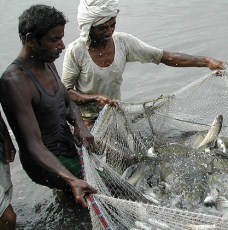

Aquaculture and Risk: a development perspective
Article by: Malcolm Beveridge, Michael Phillips and Wayne Rogers, WorldFish
Where does risk lie in aquaculture?
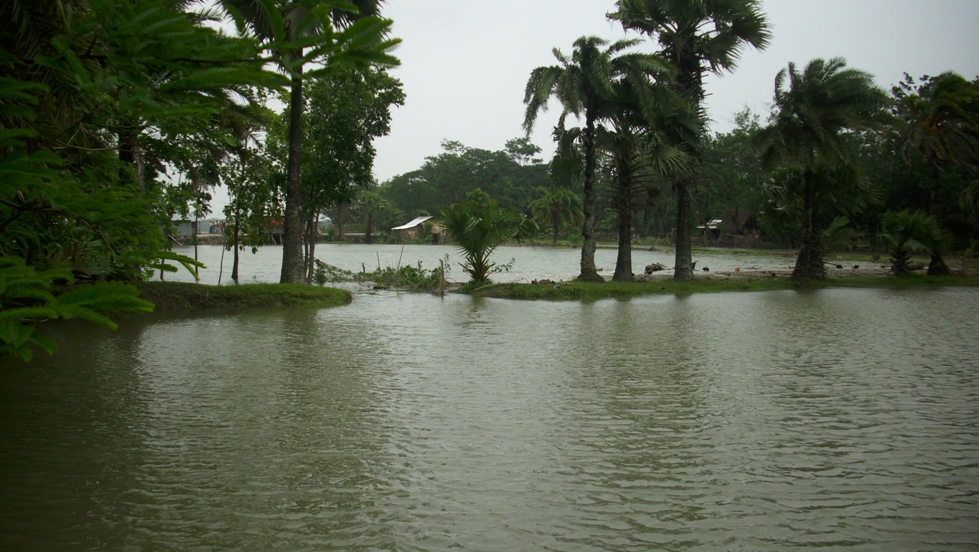 Despite its long history, the farming of aquatic foods has only been practiced at scale in recent decades and as a young, albeit now important, food sector there remains much to learn. By comparison with livestock and crops, we have a poor understanding of the biology of aquatic organisms and the kinds of environment that must be provided in order for farmed aquatic animals to thrive. Our knowledge of fish and shellfish nutrition and immunology is growing, but remains inadequate to always ensure animals are sufficiently well-fed to resist disease. Through a poor understanding of climate variability and the power of winds and waves, pond and cage production systems are sometimes not fit for purpose or are located in places where they are susceptible to damage and loss of stock. The reliance on ecosystem services to provide dissolved oxygen and disperse and assimilate wastes often results in a high degree of connectivity with upstream risks, such as pollution or harmful algal blooms. Beyond just production related risks, the entire aquatic food market system faces multiple barriers to development in those regions of the world where it is most needed. As a result of the perishability of farmed aquatic animals and the volume and nature of transactions, often carried out in an environment where management, financial resources, distribution and access to markets are scarce or difficult, an entirely different set of risks arise that need to be managed.
WorldFish and aquaculture
The mission of WorldFish is to reduce poverty and hunger through improving fisheries and aquaculture. In developing and promoting the uptake of fish and shellfish farming, our concerns are to identify and manage risks for the poor and vulnerable throughout aquaculture market systems and those who depend on farmed aquatic produce as part of their diet. Two examples serve to highlight this.
De-risking to encourage private sector investment and reduce environmental impacts
WorldFish has been exploring the business case for attracting more private investment in smallholder aquaculture. Research in Bangladesh, Indonesia and India has shown that investing in smallholder farmers and their organizations can be commercially viable, creating economic, social and environmental benefits[1]. However, it is not without risk. To minimize investment risks we increasingly know where to target investments and what the sequencing of that investment should be. Improving access to technical services, and thus to productive technologies that minimize environmental impacts, is essential. Strengthening farmer groups or producer organizations can facilitate access of smallholders to other essential inputs, such as affordable feed, quality seed and affordable credit. Investment in developing the capability and capacity of fledgling enterprises, and most importantly their business skills, is also critical. The enterprises must also be linked to business services such as microfinance, technical and market development and the collaborative purchasing of inputs. Engagement of all actors along the value chain has the potential to deliver higher, more equitable rewards. Capacity and network building among smallholders and intermediary organizations may take several years but is key in establishing new, robust, businesses in the aquaculture sector. The approach is beginning to attract the interest of the impact investment community[2].
Managing risk among poor and vulnerable aquaculturists in cyclone-prone southwest Bangladesh
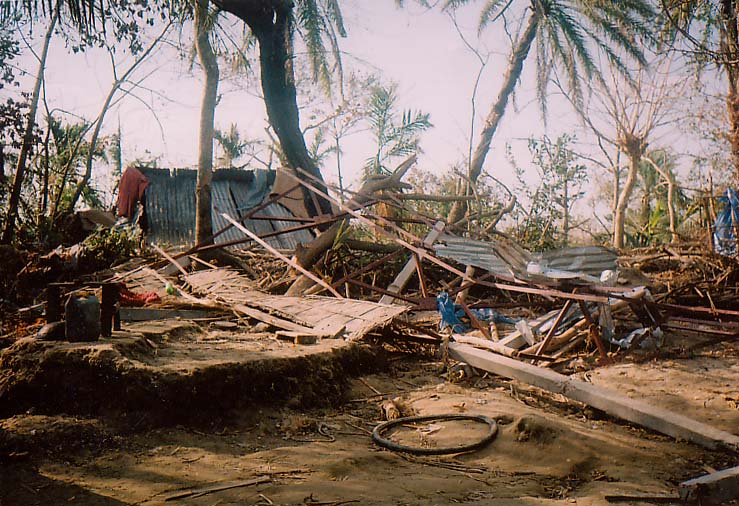 Coastal Bangladesh faces significant risks from climate change, including increased frequency of extreme weather events and salinity intrusion caused by sea level rise and hydrological changes, impacting on both agriculture and aquaculture in low lying areas. Aquaculture has been widely adopted across the southwestern coastal region, where it provides food and income for coastal dwellers; yet coastal fish and shrimp ponds face their own risks, including loss of crops and damage due to flooding and disease. WorldFish research recently explored the influence of a major climate event, Cyclone Sidr, which hit coastal Bangladesh in November 2007. Research showed that fish and shrimp ponds were vulnerable to damage, yet ponds were commonly repaired as a priority by households, and provided cyclone affected homes with an important means of coping through provision of food and income in the weeks following the disaster. Research also identified various ways in which farmers can further manage risks to aquaculture from cyclones and flooding events. Such interventions include raised pond dykes to reduce the influence of flooding, modified seasonal stocking patterns, improved hatchery and pond management to reduce disease rates and changes to fish harvesting practices to avoid periods of high flooding risk. Changing species or stocking larger fish fingerlings can also shorten the crop duration while fish nurseries provide significant short-term income opportunities and reduce risks compared to longer duration crops[3].
Conclusion
Aquaculture is needed to meet future demand for fish and other seafood, but sustainable growth requires we better understand and manage risks. Risks are aplenty in aquaculture, some of which we are only now beginning to understand and address. The most important, from a development perspective, are those that make the lives of vulnerable smallholders worse rather than better. Our approach is to work with stakeholders throughout the market system and with partners to identify these, and to co-develop and implement interventions to de-risk transactions, capturing what works and what doesn’t and sharing our learning, thereby helping attract the levels of investment needed to secure sustainable growth in this increasingly important food sector.
Acknowledgements
We thank our colleagues in Bangladesh for allowing us to share information from a draft of a paper on aquaculture and coping strategies and Dr Manjurul Karim in particular for providing the photo of Cyclone Sidr.
*Photo credit for the photos in the article: Dr Manjurul Karim, WorldFish
[1]See Rogers, W, Beveridge, M and Phillips, M. (2013). Smallholder aquaculture: sustaining the impact of private investment. New Agriculturalist. http://www.new-ag.info/en/research/innovationItem.php?a=3040
[2] See: http://www.fish20.org/about/about-sponsors; http://www.worldfishcenter.org/events/aquaculture-clinic-a-spark-good-ventures-worldfish-center
[3] http://www.worldfishcenter.org/outcome/success-stories/cyclone-affected-aquaculture-in-bangladesh