

Practitioners in Action
Ag Discussion Paper #09 "Agriculture Risk Management in the face of Climate Change" (October 2015)
Agricultural risk management (ARM) is ideally placed to support stakeholders in building resilience to these increased risks in the short and medium term. ARM frameworks and approaches can point the way to identify optimal risk mitigation, transfer, and coping strategies—and help identify appropriate actions for strengthening resilience and climate change adaptation. ARM can also play an important role in the transition to a climate-smart agriculture system by offering a useful entry point for dialogue.
This study seeks to understand the climate change impacts on agricultural risk—how do risks change?—and on agricultural risk management—how can agricultural risk managers respond? This response has two elements: First, what role can ARM play in meeting the climate change challenge? Second,how will ARM need to adapt its methodology to the “New Normal” of climate change? >>Learn More
Working Paper "Impact of Climate Change on African Agriculture: Focus on Pests and Diseases" (August 2015)
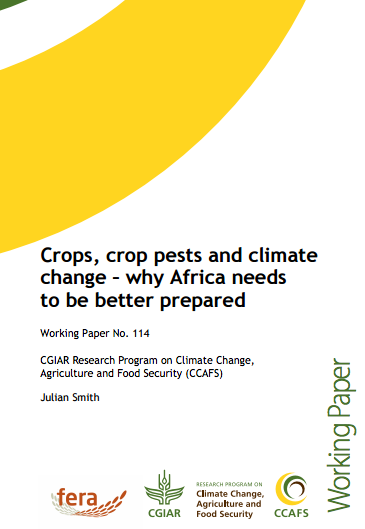 The FARMD Annual Conference 2014 planted the seeds for collaborative work between Fera Science Limited (formerly the Food and Environment Research Agency of the British Department for Environment, Food and Rural Affairs) and the CGIAR Research Program on Climate Change, Agriculture and Food Security (CCAFS). The two organizations both contributed to Crops, crop pests and climate change – why Africa needs to be better prepared.
In the report, Julian Smith explains that "ongoing investments in agriculture will not deliver for Africa until the destabilizing nature of crop pest events, especially shock outbreak events, are addressed. Crop pests already account for 1/6th of farm productivity losses. As a result of climate change, the prevalence of crop pests will change and the frequency of shock pest events will increase, putting agricultural systems at risk. The Working Paper details six possible strategies to combat pests and diseases.
>> Dowload the Report. >>Download the Summary.
Dissemination Workshops on Central Asia Agriculture Risk and Solutions Assessments (June 2015)
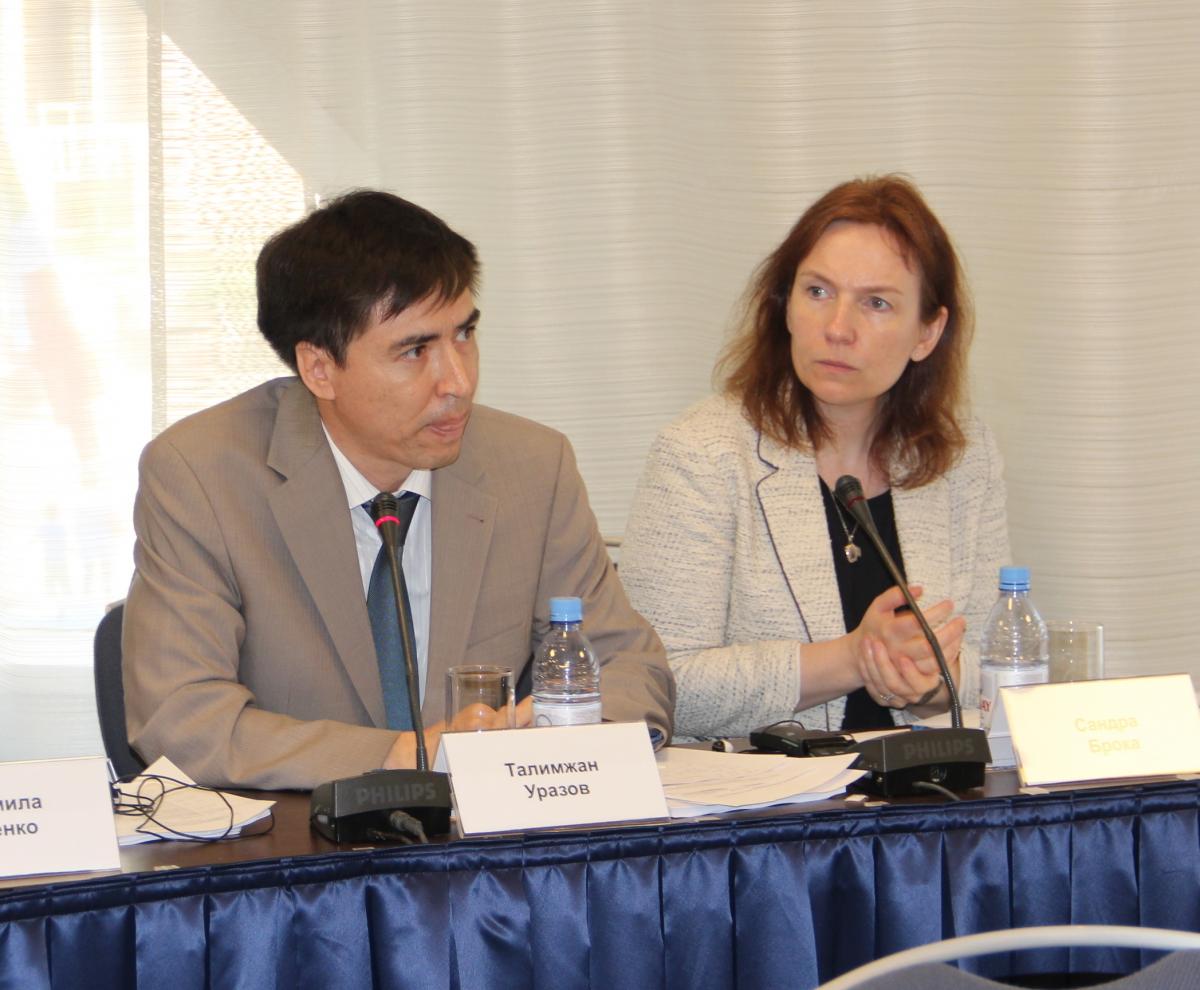 Dissemination workshops were organized in Bishkek, Astana, and Dushanbe in June to present the findings of the Central Asia agriculture risk and solutions assessments that have been conducted over the past two years.
The risk assessments looked at production, market and enabling environment risks to the crop and livestock sectors in the three countries and assessed potential risk management instruments to address the main risks. For all three countries, the main recommended responses were to improve productivity and to diversify production and/or markets and to deepen existing markets to strengthen resilience among producers and make market access more reliable. The three reports will be published sometime early fall 2015. >>Learn More.
Two-day Technical Training on How to Conduct an Agriculture Sector Risk Assessment (May 2015)
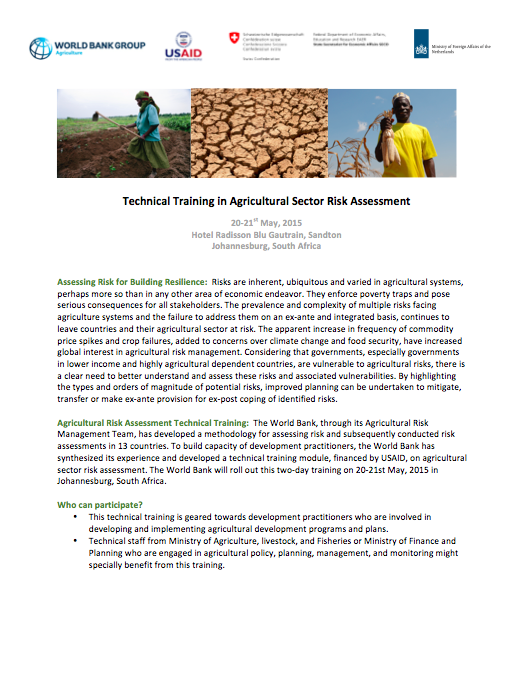 The World Bank, through its Agricultural Risk Management Team (ARMT), launched a two-day technical training on how to conduct an agriculture sector risk assessment on May 20, 2015 in Johannesburg, South Africa.
Participants in the training came mainly from Ministries of Agriculture, with representatives from seven Sub-Saharan African countries (Burkina Faso, Kenya, Madagascar, Malawi, Rwanda, and Tanzania). The participants over the course of the training learned the conceptual framework and tools for undertaking agricultural risk assessments, and acquired skills to identify, prioritize, and manage agricultural risks.
>> Learn More.
Consultative Stakeholders’ Workshop: Effective Agriculture Risk Management for Resilient Growth in Rwanda (March 2015)
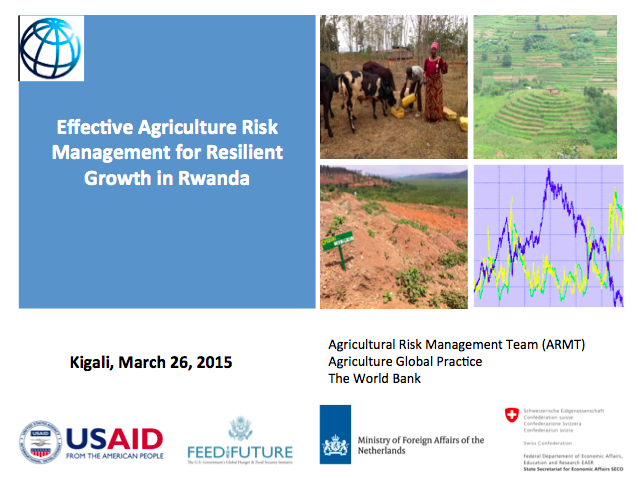 The World Bank’s Agriculture Risk Management Team, in collaboration with the Ministry of Agriculture Animal Resources, conducted a joint field mission in March 2015. The mission aimed at assessing current risk management measures in the areas of water management for crop production, plant pest and disease management, and water and feed availability for livestock production.
The Ministry of Agriculture and Animal Resources arranged a consultative stakeholder meeting on March 26, 2015 for the team to share preliminary findings of the assessment and solicit feedback from key stakeholders. >>Learn More.
Consultative Stakeholders’ Workshop: Mitigating Agriculture Risks and Strengthening Climate Resilience in Senegal (March 2015)
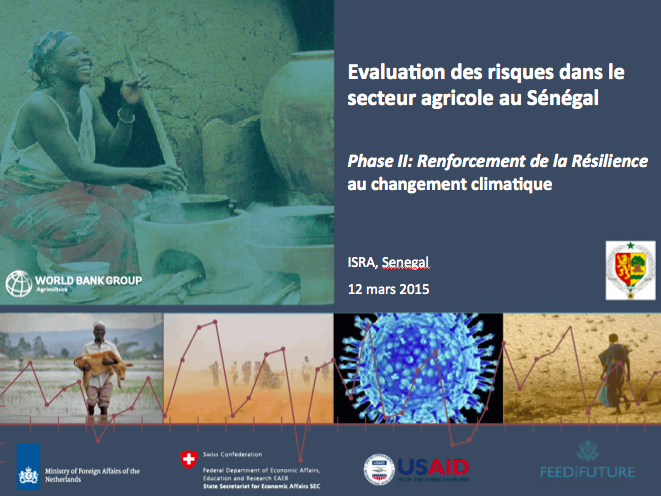 The World Bank’s Agriculture Risk Management Team, in collaboration with the Ministry of Agriculture and Rural Equipment, the Ministry of Livestock and Animal Production, and the Senegalese Institute of Agricultural Research, conducted a joint field mission in Feb-March 2015 to identify optimal pathways to improved climate resilience for agricultural sector.
At the end of the field mission, a consultative stakeholders’ workshop was organized to present and discuss priority interventions, solicit feedback, and outline a strategic framework for improved risk mitigation. >>Learn More
>>Download the four presentations
Launch of the discussion paper "Risk and Finance in the Coffee Sector: A Compendium of Case Studies Related to Improving Risk Management and Access to Finance in the Coffee Sector " (March 2015)
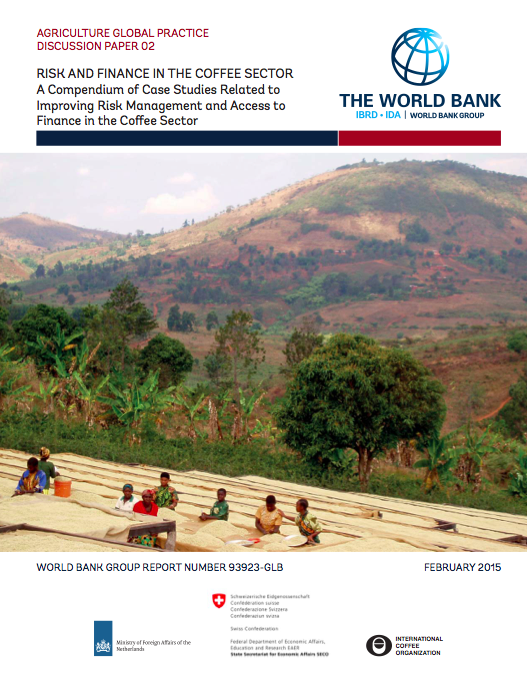 Millions of smallholder coffee growers and coffee trading enterprises daily confront risks. The prevalence of these risks reduce the incentives and willingness of financiers to lend to the sector, and also curbs the interest of coffee sector actors in borrowing to invest in their enterprises. Through 20 case studies taken from a number of coffee-producing countries, the report outlines the major risks and constraints facing the sector, and highlights the opportunities for improving risk management and access to finance.
Many of the cases detailed have not been widely shared across other coffee-producing countries, despite these countries sharing similar risks and facing similar financing constraints. As such, it is the aim of this report to foster cooperation among all stakeholders within the coffee sector, and to raise awareness as to the potential means for improving the management of risks and expanding the provision of finance to the sector through innovative approaches. >> Learn more and downlaod the report.
The study is the outcome of a collaborative work between the World Bank Ag Risk Management Team and the International Coffee Organization. It was launched at the International Coffee Council in London on March 2nd, 2015.
7th Edition of the World Bank's Rwanda Economic Update : A Focus on Risks to the Rwanda Agriculture Sector (February 2015)
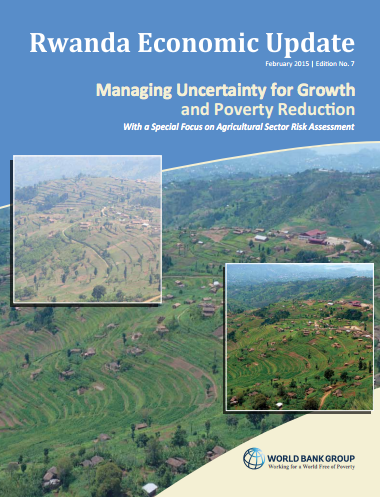 The 7th Edition of the World Bank's Rwanda Economic Update was launched in Kigali, Rwanda on February 25. Entitled "Managing Uncertainty for Growth and Poverty Reduction: Agriculture Sector Risk Management,” the 7th edition assesses risks to Rwanda's agriculture sector and identifies areas of risk management solutions that need deeper specialized attention.
While systemic risks to the agricultural sector are limited, local and commodity risks remain, preventing the sector from reaching its potential. Long-term trends, particularly climate change, and the structural changes that the government is promoting to increase productivity will alter Rwanda's exposure to risks. Risk management approaches that take into account the evolving nature of risk can support productivity and competitiveness as the sector develops and markets evolve.>>Know more.
>>Download a copy of the report >> Download the presentation given by Åsa Giertz (Agriculture Specialist with the Agricultural Risk Management Unit, Agriculture Global Practice at The World Bank ) on February 25, 2015 in Kigali.
Publication of a Special Issue of Cahiers Agricultures on Market Information Systems (MIS) (January 2015)
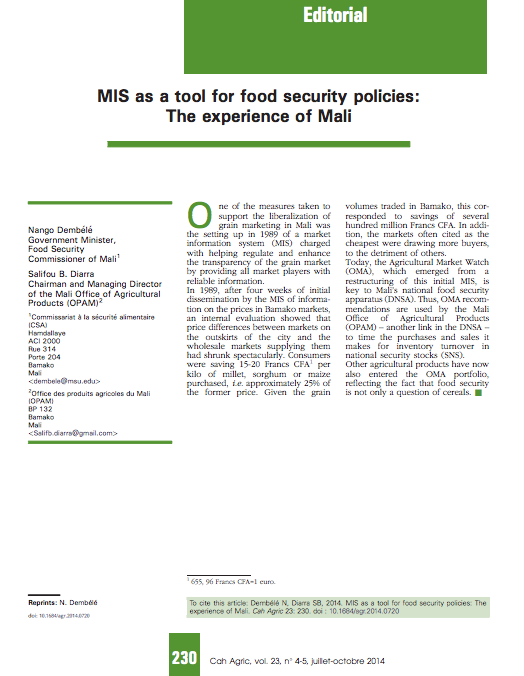 The Cahiers Agriculture special issue is entitled «The Renewal of Agricultural Market Information Systems in Developing Countries». Agricultural Market Information Systems (MIS) collect, process and disseminate information on the situation and dynamics of agricultural markets in order to improve public policies and/or render these markets more transparent and more efficient.
Agricultural MIS developed in two steps in developing countries: a first generation of MIS emerged in the 1980s and a second generation followed in the 2000s (due to the creation of new MIS but also to the mutation of some MIS created in the 1980s). Second generation MIS (2GMIS) developed many technical and organizational innovations, giving birth to a great diversity of models. This special issue provides some insights on the functioning and the impact of these new MIS models.
The publication benefited from a financial support of Cirad and CTA and is based on research projects funded by the Agence Française de Développement (AFD), the CTA and the Hewlett Foundation. >>Learn More. >>Download the articles.
CCAFS Live Webcast: Insuring the Future of Farmers under Climate Change (January 2015)
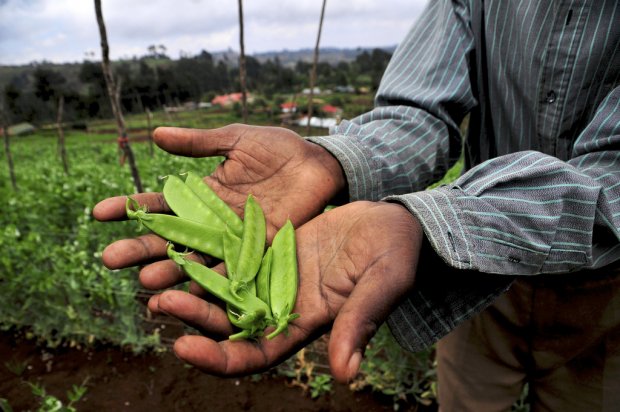 In a changing climate, stronger and more frequent weather and climate extremes are the new norm. Smallholder farmers in the developing world experience some of the highest levels of vulnerability to weather and climate risk. In this context, weather index-based insurance is an attractive approach to managing weather and climate risks. >>Learn More.
Index insurance has been found to work well at the pilot scale - but can it reach farmers at a broader scale and achieve commercial viability?
>> Watch experts' discussion held on Wednesday, January 28 2015.
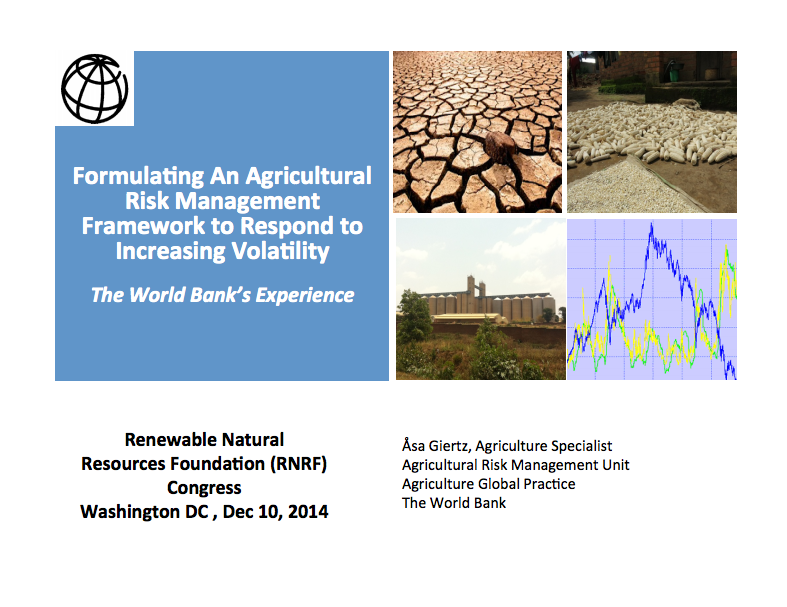
The World Bank (WB) Experience in Formulating an Agricultural Risk Management Framework to Respond to Increasing Volatily, Presentation by Åsa Giertz (December 2015)
At its last congress "Adapting Food Production to a Changing Climate: Identifying Tactics and Establishing Priorities", the Renewable Natural Resources Foundation discussed the consequences of a changing climate on agricultural production. The presentations and discussions aimed at identifying specific strategies and tactics to sustainably adapt food production to a changing climate.
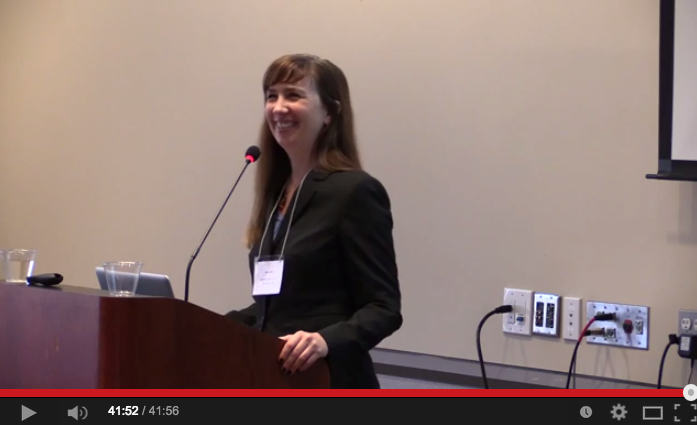
One way to meet this goal is to better understand and manage volatility and risks in the food production sector. Åsa Giertz, an Agriculture Specialist with the WB’s Agriculture Global Practice, presented the WB Agriculture Risk Management Team's experience in identifying systemic risks and supporting countries in implementing risk management mechanisms. Drawing the lessons from different risk assessment studies conducted in Malawi, Mongolia or Rwanda, she demonstrates that the best way to effectively implement risk management strategies is through a systems approach in which interventions are streamlined and prioritized according to the impact and frequency of risks.
>> Download the Presentation. >> Watch the Video.
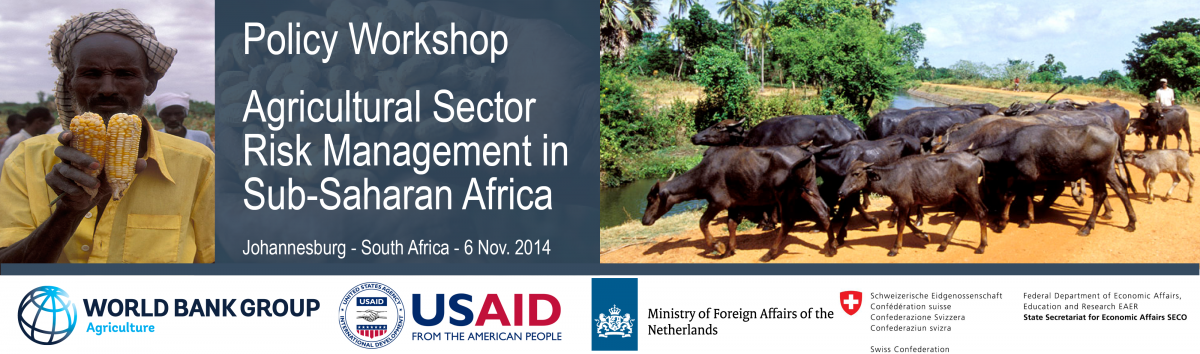
Policy Workshop on Agricultural Sector Risk Management in Sub-Saharan Africa, 6 Nov. 2014 in Johannesburg, South Africa (November 2014)
Government Representatives from more than 12 African countries attended the policy workshop on Agricultural Sector Risk Management in Sub-Saharan Africa, held on November 6 in Johannesburg, South Africa. Sponsored by the USAID and the World Bank, the event provided a platform for policy makers to discuss and share their experience on the integration of risk management into agricultural policies in their respective countries. After a presentation on the past and ongoing agricultural risk management projects of the Agricultural Risk Management Team, the first panel discussion on the limitations and strengths of current approaches to agricultural risk management preceded the World Café during which policy-makers discussed four questions for 15-minute each, in four informal workshops facilitated by one of the conference organizers. The interactive format, time constraint and targeted questions of each group facilitator made the World café the most outstanding event of the day, resulting in rich and proactive discussions. After a presentation of the integration of risk management into the National Agricultural Investment Plan in Niger, the policy workshop finished with a solution-oriented panel on operationalizing and integrating risk management.
>> See more and download the workshop agenda and presentations here.
When Bruce Campbell and CCAFS blog about FARMD (October 2014):
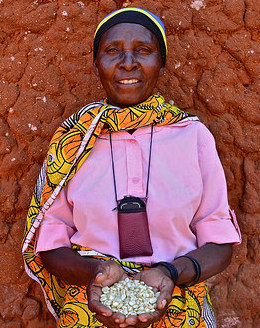 "It’s time to scale up proven climate risk management solutions for Africa's farmers said Bruce Campbell and the Climate Change, Agriculture and Food Security (CCAFS) research team in their latest blog post.
Here is the CCAFS team on the importance of FARMD, and the need to address the knowledge gap on the nexus climate change and risk management:
"The Forum for Agricultural Risk Management in Development (FARMD) was created in 2010 to address this need and build a network of risk management practitioners. Today, FARMD is a vibrant knowledge-sharing platform and community of practitioners, holding frequent webinars and annual conferences. In its 2014 annual conference, to be held November 4-5, FARMD will examine the nexus between climate change and agricultural risks in sub-Saharan Africa, seeking to fill an important knowledge gap and improve understanding on the topic."
>> Link to the full blog post here.
>> CCAFS theme page on Climate Risk Managment avaiable here.
Geodata for Agriculture and Water Facility (G4AW) (October 2014)
The Geodata for Agriculture and Water (G4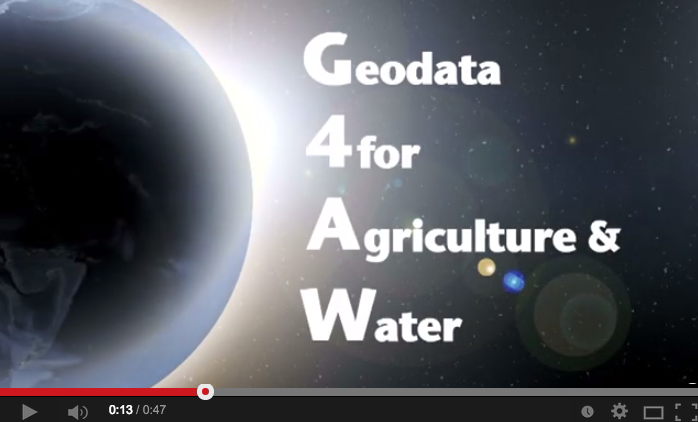 AW) Facility is the new grant programme of the Dutch Ministry of Foreign Affairs withinthe policy priorities Food Security and Water. G4AW focuses on improved and increased sustainable food production and more efficient use of water in agriculture.
The G4AW Facility supports projects that will provide smallholder food producers (farmers, pastoralists and fishermen) with satellite information based products and services. Satellite-based information provides fast, timely and objective data that, once processed, can be used for user-tailored agricultural advices resulting in higher crop yields, water use efficiency, early warnings for drought, flooding, diseases, financial products, etc. .
See older posts here.