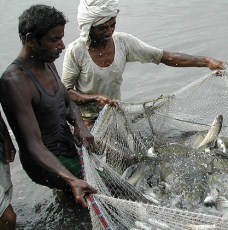


Disease Management in Aquaculture
By Mimako Kobayashi and Randall Brummett, Senior Aquaculture Specialist at The World Bank
Aquaculture is growing, but disease is a big issue
Aquaculture has been the fastest growing animal protein production sector for the last 20 years. In 2010 world aquaculture production recorded an all-time high of 59.9 million metric tons of fish for human consumption, with an estimated value of US$119 billion (FAO 2012). Aquaculture’s contribution to world food fish production steadily increased from 9% in 1980 to 47% in 2010 and is projected to surpass that of capture fisheries by 2015 (OECD-FAO 2011).
Behind the rapid aquaculture expansion is growing seafood demand driven by population growth, rising incomes and changing consumer preferences, and the continued trend of seafood demand growth represents investment opportunities. The Global Aquaculture Alliance, among others, has estimated US$100 billion of investment opportunities. However, constraining private investment is the risk of diseases, which represents one of the major risks to aquaculture operations.
Fish diseases have cost the global aquaculture industry tens of billions of dollars over the last 20 years. The world’s shrimp industry has suffered losses from white spot virus and infectious myonecrotic virus on the order of US$10 billion since 1990 and new diseases emerge on a regular basis. Vietnam alone reports losses due to disease of US$1 billion per year on average. The Chilean salmon farming industry is in the process of recovering from a severe outbreak of infectious salmon anemia, which began in 2007 and cost 350-400 thousand tons of fish, US$2 billion of revenue and some 30,000 jobs.
Therefore, addressing fish disease issues is a necessary condition for securing new private investment in aquaculture. Below we discuss the importance of commitment both at the producer level and at the national regulatory level in order to have an aquaculture investment-ready environment in place.
Prevention at the farm level
One major contributor to fish disease outbreaks is disease pathogen incursions due to international transfers of live aquaculture animals and other fish products. However, once pathogens enter a country, much of disease prevention efforts fall on the shoulder of producers. Good practices at the farm level for disease prevention are generally known and well documented. The most important and widely used in well-advanced systems are:
- Exclusion to keep pathogens out of a production unit. In its most advanced form, exclusion involves eliminating water exchange with the surrounding environment through the use of aeration.
- Management. There are other management practices to reduce disease occurrences, including careful control of stocking density, water quality and nutrition that minimizes stress of fish and maintain healthy populations in the culture environment.
- Genetic resistance. Producers can use pathogen-free seed and those selectively bred for genetic resistance. This requires virtually no changes in farm infrastructure. However, experience with shrimp indicates that it takes 5-10 years to develop genetically resistant stocks. Supplementing genetic resistance is the use of vaccines. The Norwegian salmon industry has mostly replaced antibiotics with vaccines.
Prevention at the community level
Moreover, as with many diseases of terrestrial animals and pests and invasive species, fish diseases usually do not stay on farms. Once introduced, pathogens can and do spread to other farms via the water supply, birds and wild fish and other vectors within the ecosystem. Consequently, producers’ efforts to control disease tend to be interdependent, that is one farm’s practices affect the likelihood of disease outbreak, and hence the prevention practices, on another farm. Because of this interdependence, the aggregate system-level prevention effort tends to be less than desirable in unregulated systems (Kobayashi and Melkonyan 2011). As a result, even if the majority of farms practice good disease management, a single irresponsible farm that introduces a new disease can result in collective disaster.
Regulation
Because leaving disease prevention to individual producers does not guarantee protection from either introduction of new diseases or exacerbation of existing conditions, the public sector has an important role to play in disease management. The first line of defense is at the border level to prevent disease pathogens from entering a county. Strict quarantine measures and secure sourcing of transferred animals from pathogen-free hatcheries can help to minimize the threat.
Additionally essential to the stability of the industry are: spatial planning to separate farms so that diseases cannot easily move and early detection systems supported by competent veterinary authorities and rigorous control of the movement of cultured animals. Behavioral aspect, as manifested in interdependence of individual producer practices, also needs to be considered in the regulatory framework. Unfortunately, most catastrophic disease outbreaks have occurred in developing countries, where over 90% of aquaculture production takes place and where regulatory systems and veterinary services are weak.
Conclusion
By addressing these findings in aquaculture management and regulations, risks for catastrophic disease outbreak will be reduced, creating a more secure environment for much-needed new investment in farmed seafood production. With a suite of private and public sector partners, the World Bank is working to modernize and improve aquaculture for food security and job creation by tackling the problem of fish disease at the national regulatory level. Case studies in Chile and Vietnam have identified key causative factors behind disease outbreaks in farmed salmon and shrimp and elucidated the ways and means for successful recovery from disease outbreaks. A draft of the Chilean case study is available at: http://www.gaalliance.org/cmsAdmin/uploads/GAA_ISA-Report.pdf.
References
FAO (2012). The State of World Fisheries and Aquaculture 2012. FAO: Rome, Italy.
OECD-FAO (2011). Agricultural Outlook 2011-2020. OECD: Paris, France.
Kobayashi, M. and T. Melkonyan (2011). “Strategic Incentives in Biosecurity Investment: Theoretical and Empirical Analyses.” Journal of Agricultural and Resource Economics 36(2):242-262.