

Innovations in Extension and Advisory Services
International Conference Proceedings

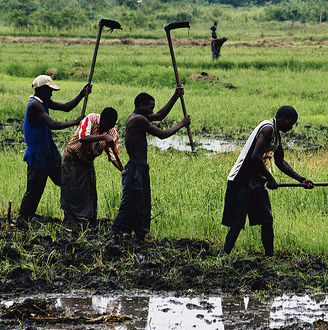
In much of the developing world, agriculture is the key vehicle for moving millions of people out of poverty. Smallholder farmers, the majority of whom are women, produce most of the food we eat. Often they do this with minimal support, using outdated technologies and practices. They are seldom reached by extension and advisory service providers as their needs and demands are not well articulated or understood. They also lack the resources, mainly financial, required to access much-needed inputs. Increased attention is now being paid to the issues inhibiting the full participation of smallholder farmers in value chains.Policy and institutional changes are critical in bringing about a transformation.
PolicyWhat are the policy lessons from the past two decades of reforms of governance structures, reductions in public funding and increased privatization of extension and advisory services? Have they resulted in increased accountability, efficiency, empowerment and impact? What is the future role of governments in providing extension and advisory services as public goods? What mix of regulations, goods and services is most appropriate for offering extension and advisory services that meet country-specific goals within any given socio-economic and agro-ecological context? What research is needed to fill the knowledge gaps? Learn more about Policy Topics here.Tools and ApproachesWhat innovative tools (including the use of ICTs and the mass media) and approaches are proving effective in the delivery of extension and advisory services? How can the islands of successes be captured and the lessons and best practices shared within countries and across regions with policymakers, development actors and extension practitioners? How can they be up-and out-scaled to ensure quality, cost-effectiveness, sustainability and impact of these services on agricultural productivity, sustainable livelihoods and natural resource management? Learn more about Tools and Approaches here.Capacity DevelopmentWhat new knowledge, skills, and infrastructure are needed in light of the expanded role of extension and advisory services? How best can the capacity of the actors (farmers, organizations and networks) be strengthened in the short to medium term? What good practices exist in capacity development? What research is needed to fill the knowledge gaps? What types and level of investments are needed? Learn more about Capacity Development Topics here.Learning NetworksWhat is the role of learning in enhancing the effectiveness of extension and advisory services and increasing their impact? What institutional arrangements need to be put in place to support lifelong learning by farmers and other key actors for continuous innovation? What form should they take and how should they evolve? What mechanisms exist for monitoring and evaluating extension and advisory services to support learning and make them more accountable and which are feasible? What research is needed to fill the knowledge gaps? Access resources on Learning Networks here.Nairobi DeclarationWe, more than 400 participants comprising: extension practitioners from public, private and civil society organizations, farmers, policymakers and representatives of the research and development community, academia, the private sector, donor agencies, financial institutions and the media from 75 countries; congregated in Nairobi, Kenya from 15 to 18 November 2011 for an international conference on Innovations in Agricultural Extension and Advisory Services: Linking Knowledge to Policy and Action for Food and Livelihoods. |