

The World Bank's Weather Risk Management Course

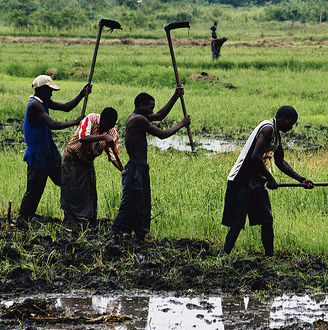
Weather risk is pervasive in the agriculture sector. It influences farmer profitability and remains one of the major constraints limiting farmers from accessing credit necessary to expand production and improve productivity. Other actors in the supply chain also feel the effects of weather risk. Input suppliers are reluctant to offer credit for inputs if they are uncertain about yields and farmers’ to repay. Banks providing pre- and post-harvest production credit are affected by and worry about high rates of default in the event of adverse weather. To address weather risk, many developing countries have implemented traditional crop insurance programs. Such programs, however, cover a very small segment of farming populations and are often not sustainable. As a result, a large majority of farming populations in developing countries remains vulnerable to weather risks.
Index-based insurance is a new tool that addresses some of the limitations of traditional crop insurance programs. The World Bank has worked with a large number of partners to test the use of index-based weather insurance as a means to manage weather risks (namely, excess/deficit rainfall and flood risk) and enhance access to finance in a number of countries in Africa, Latin America and Asia. Agriculture and Rural Development is in the process of sharing with the wider development community the lessons of its research and development on index-insurance. It is working to mainstream weather risk management issues into broader World Bank projects and to facilitate support to integrated risk management approach.
This course aims to provide stakeholders with a background of weather risk and risk management options.
Modules
- Module 1A: Introduction: Types of Products
- Module 1B: Introduction: Identifying Programs
- Module 1C: Introduction: Work Plan
- Module 2A: Local Markets
- Module 2B: Identifying Programs
- Module 2C: Risk Transfer
- Module 3A: Introduction to Weather
- Module 3B: Treatment of Cleaned Data
- Module 4: Requirements
- Module 4A: Types of Indices
- Module 4B: Designing a Weather Index
- Module 5A: Approaches to Selecting an Index
- Module 5B: Approaches to Calibrating an Index
- Module 5C: Quantifying Weather Risk Analysis
- Module 6: Criteria for Contract Design
- Module 6A: Three Phases of Rainfall Deficit
- Module 7A: Three Components of a Premium
- Module 7B: Approaches to Portfolio Risk Analysis
- Module 8A: Program Initiation - Operational Aspects
- Module 8B: Process Mapping
- Module 8C: Individual Clients
- Module 8D: Processes in Operations
- Module 9: ANNEX