
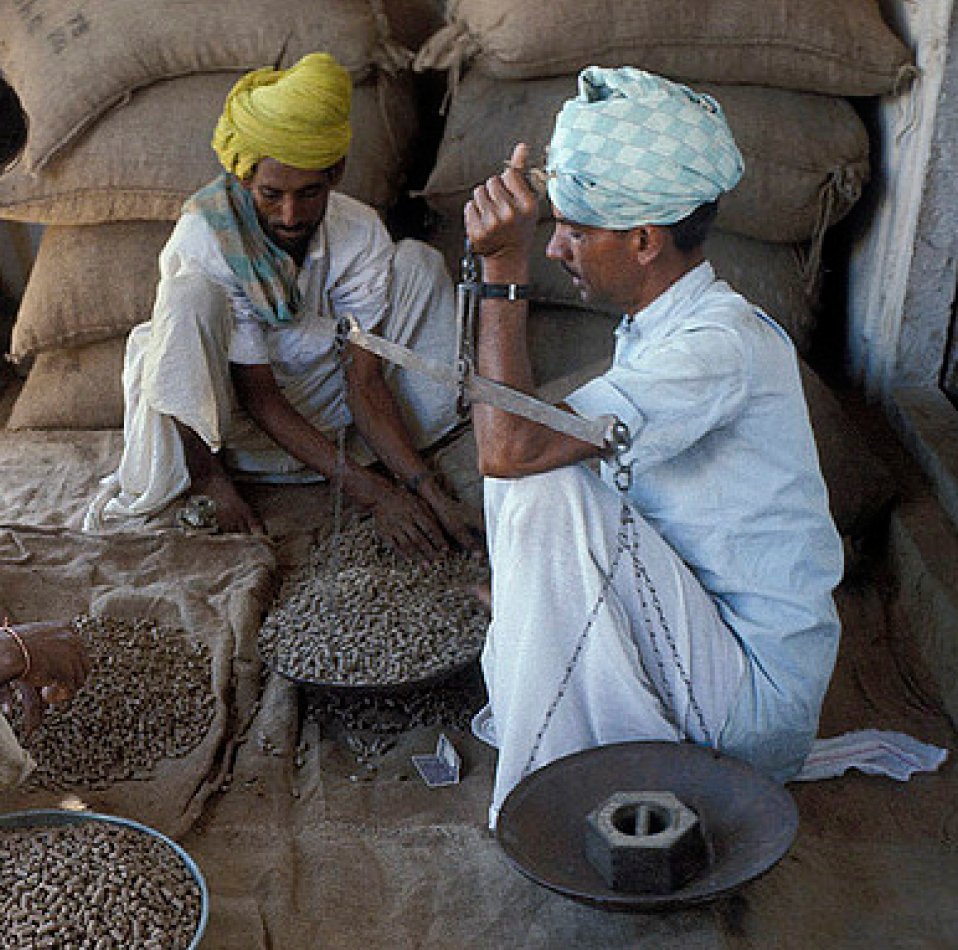

Interested in the issue of Price Volatility?
Check out FARMD's latest Featured Topic to learn more on the issue and discuss with other practitioners.

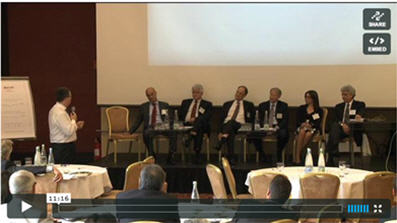
Panel Discussion | Futures Exchanges: Perspectives on the “New Reality” of Agri-Commodity Trading
Panel Discussion at the FARMD Annual Conference: Price Volatility and Climate Change, Implications for the Ag-Risk Management Agenda. Zurich, June 9-10, 2011.
Introduction
In any given day, high and volatile food prices and their implications on food security is a headline somewhere in the world. The issue has been the cause of riots and recent governments’ fallings. FARMD invited representatives of some of the most important futures exchanges and academics, to discuss the implications of the “new realities” of global agri-commodity trading, as highlighted by John Baffes (see presentation), on the effectiveness of future exchanges as an effective price risk management tool.
Marc Sadler, the moderator of this panel and leader of the Agricultural Risk Management Team of the World Bank, stirred the discussion of the panel that followed John Baffes’ presentation into three main topics: the efficiency of future exchanges in the critical times, the pressure for regulation of those markets, and the role of future exchanges in developing countries. “Given that the ‘new reality’”, said Sadler, “is made of billions of dollars, financial markets, and not just small farmers in Iowa anymore… Does this mean that price risk management hedging is still in play today? And do futures exchanges still work?”
The panel was formed by: David Lehman, Managing Director, Commodity Research & Product Development. CME Group; Christopher L. Gilbert, Professor of Econometrics, University of Trento; Helen Mastroscostas, Vice President, Fixed Income, Currencies and Commodities, Golden Sachs International; Peter Blogg, Head of Product Management for Commodities, NYSE Liffe; and Rod Gravelet-Blondin, Senior General Manager, South African Futures Exchange (SAFEX).
Highlights on the discussions are presented below. Click on the respective links to watch the videos.
Perceptions on the effectiveness of futures exchanges: do they still work?
 David Lehman
Watch the video
In a short answer, David Lehman, from CME Group, said “they do work.” He highlights that the “Electronification (electronic) of the markets has led to a growth in trading volumes and has led to access to markets around the world.” Lehman also said that these causes have “enhanced the price discovery function of the market as well. The producers in Brazil and the producers in Malaysia now are able to access the markets and bring the supplies, not on a physical sense…but as a cash contract, essentially.” He emphasized that “What has benefited the markets broadly is that as this liquidity has expanded, a lot of it coming from financial players, that has tighten the bid-ask spreads in these markets, it’s lowered the cost of hedging and the competition that the exchanges have which over the counter and other exchanges is driving down the fees that they exchanges charged. So I think the answer is yes, they do work.”
 Peter Blogg
Watch the Video
Blogg offered a different dimension of this new reality, quoting John Baffes, by stressing the importance of the development of futures within the European market, specifically for agricultural risk management. “If you look 5 years back a good day in Paris wheat market would have been a 550 tones contracts, this year we are averaging something around 30 thousand lots a day. The growth is absolutely phenomenal.” Blogg added that “80 percent of this business is coming from people involved in the commercial markets, so it is people with a real need to hedge price risk. We are talking about European producers cooperative, commodities processors, a whole range of institutions across Europe that have never been exposed to price volatility before, largely because of the common agriculture policy, so futures are slowly just coming into their own.” Blogg highlighted that the deregulation of markets and the availability of finance were creating new futures markets all over the world. He concluded “For a lot of people in the physical market the cost of finance has been a huge issue, particularly post the financial crisis so auctions offer a much more cost effective way for people to put on a hedging strategy”
 Rod Gravelet – Blondin
Watch the Video
To corroborate Blogg’s point of view, Rod Gravelet-Blondin added his perspective of Africa that the deregulation of the markets in South Africa have served much better than “people trying to regulate the market.” Gravelet –Blondin said that price risk management tools benefits by large because it brings to economic growth to a wider area. “It allows finance flowing into agriculture, because financiers now can have an instrument in which to manage their risk. Without finance flowing into agriculture you have a major problem.” Gravelet – Blondin pointed out as well as Blogg that increase of finance is key to manage risk. He added: “We spend all our money educating people how to manage their price risk in the market, we’ve got no publication that said how to make money on the commodity market,” said Rod, “we concentrate our efforts on managing price risk and I think that’s the same for most exchanges.”
 Helen Mastrocostas
Watch the Video
Mastrocostas acknowledges that although there are markets’ inaccuracies and some inefficiencies, there is also a realization that there is not a better alternative. “Seating there completely without a risk management policy is one of the imprudent things you could potentially do right now,” said Mastrocostas, “even if it is inefficient is the best you have to protect yourself and protect portfolios.“
Christopher Gilbert
Watch the Video
Professor Gilbert talks on the subject of speculators and the right or wrong when following their decisions in the market:
- “Speculators have their hunches, they make their bet… sometimes they are wrong,” Gilbert said, “they may not always get price movements correct they may move prices away from fundamentals, but they are doing so, in general, on the basis of where they think prices of should be.”
- David Lehman follows Gilbert’s comment, by presenting the example of a future market with very little speculation on his view, the case of the Chicago wheat market.
Comments from the floor — why the “new reality” has not decreased the costs of heading?
Watch the video
Regulating futures exchanges: an effective policy option?
Watch the video
These are some of the main ideas that were debated in this disussion:
- Greater transparency (of the physical markets) is a good objective. However, the traders are concerned that those rules are going to increase the burden of the industry and that’s not where the problems occurred.
- It is very important to have regulation but a regulation that enhances the operation of the market and does not impede the operation of the markets.
- Many of the regulations which has been discussed tend to increase volatility rather than decreased it.
High volume trading: what is the role and the utility that high volume traders bring to the market?
Watch the video
Here, some of the ideas that bounced around in this panel:
- High frequency traders bring a tremendous amount of liquidity. But the question is if these high frequency traders are makers or takers. If they are market makers it is beneficial; if they suck liquidity out of the market, then it is not so beneficial.
- The impact of technology on markets shows how these algorithmic traders can increase the complexity of the systems. And complexity is one cause for disasters.
- Systems are too complex and nobody understands all the interactions.