

Ecologically Based Rodent Management: Reducing pest risks for farmers
Grant Singleton, International Rice Research Institute, Los Baños, Philippines
The impact of rats in developing countries in Asia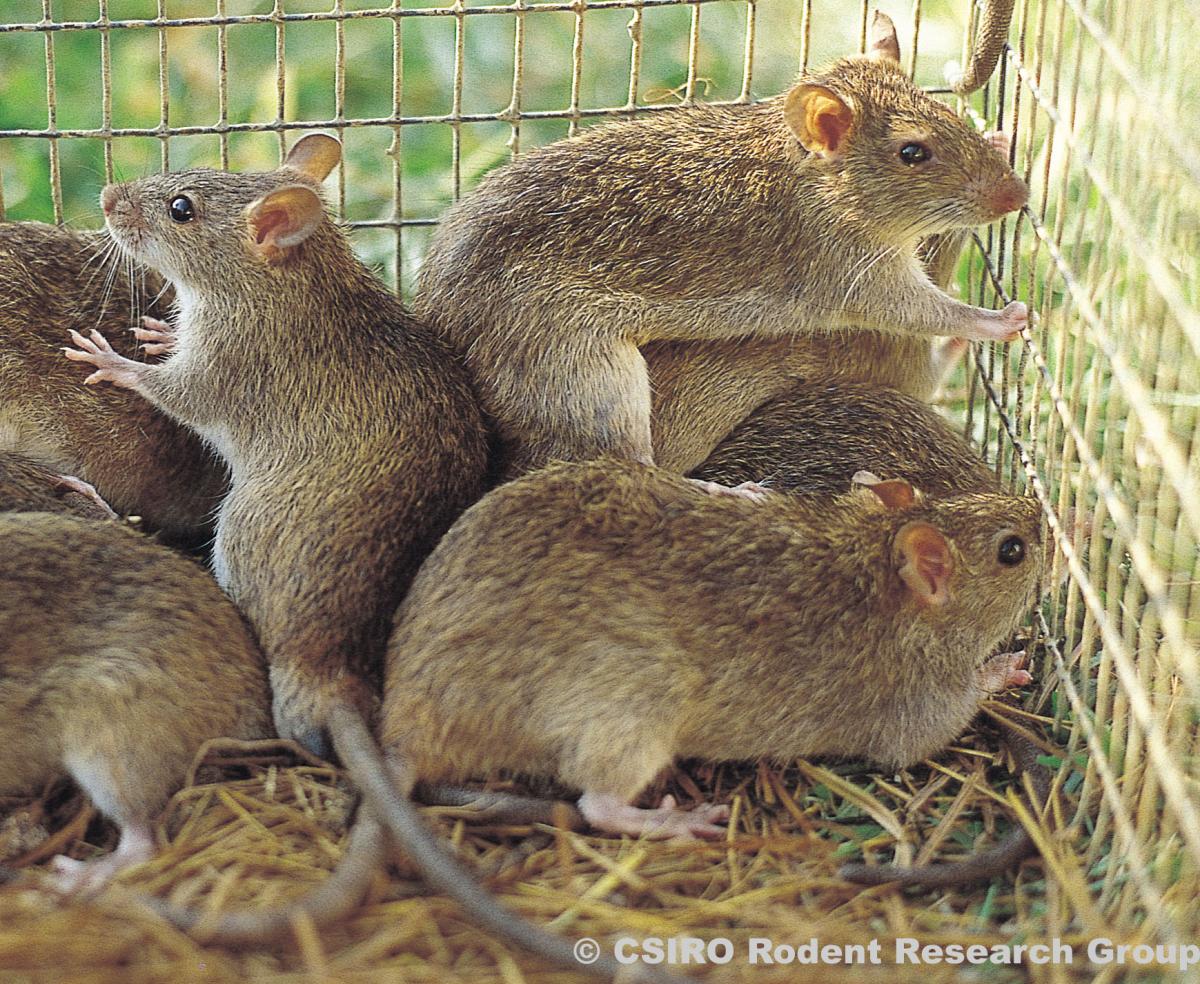
Across Asia, pre-harvest and post-harvest losses of rice to rats are around 10-15%. A loss of 7% is enough rice to feed 245 million people—roughly the population of Indonesia—for 12 months. Smallholder farmers in developing countries generally have farm sizes ranging from 0.5-2 hectares. Rat damage is often patchy so an individual farmer may lose half of their entire rice crop to rats. This is devastating for subsistence farmers or families who rely heavily on their rice crop to educate their children.
Are rats too intelligent?
Farmers are born with rats on their farm and will die with rats still there. This has led to a level of acceptance of rodent damage by farmers except when there are occasional high rodent densities. Many farmers either feel that there are no effective methods to reduce rodent damage to their crops or rats are simply too intelligent. Neither is correct.
Common control methods – high environmental and health risks
When rodent damage is high farmers become desperate and resort to high risk strategies for rodent control. Approaches include ill-informed use of chemical rodenticides, a mix of used engine oil and highly toxic and concentrated insecticides applied to flooded rice crops, and electrocution of rats through the placement of a live wire (220 volts) around the edge of the rice crop. The first two approaches provide high environmental risks. The use of a cocktail of oil and chemicals simply kills all the invertebrates and small mammals in the landscape – a mini-ecological disaster. The use of live wires causes high risks to the health of humans and draught animals. Indeed recently two people were electrocuted in South Sumatra, and there were headlines in Vietnam in the early 2000s when a youth was electrocuted.
A successful method to manage environmental risks
Ecologically-based rodent management has now taken center stage in Asia and eastern Africa for management of rats in agricultural systems. The development of resistance and increased tolerance of rodents to chemical rodenticides, and an increased awareness of ecological and human health issues associated with the methods of control described above, led to a search for more environmentally benign methods of rodent control. A better understanding of the breeding ecology, habitat use and changes in population densities during the cropping seasons, provided a refreshing approach to rodent management. Ecologists work closely with farmers to combine our knowledge of the secret lives of rodents with the calendar of cropping practices, to develop strategies to control rodent pests. The key is identifying when and where to control rats. Farmers already have developed many traditional methods to control rats, but they are usually applied too late.
Rodents are highly mobile, so if only a few farmers implemented good management practices, their crops would soon be reinvaded by rats from neighboring fields. Community action is therefore essential for effective and sustainable ecologically-based rodent management (EBRM). The bottom line is that community management must be conducted much earlier than previous control actions by farmers.
EBRM practices will vary for different species because their biology and ecology in specific agricultural landscapes are different.
EBRM has been highly successful in Indonesia and Vietnam for the ricefield rat, Rattus argentiventer. In Indonesia, a 3-year village level study over five cropping seasons resulted in a 6% increase in rice yield, a 50% reduction in use of rodenticides, no further use of “engine oil chemical cocktails”, and reduced costs of control. In Vietnam, a similar study led to a 10-14% increase in rice yields, 50% reduction in rodenticide use, and 20% higher economic returns to smallholder farmers.
Ecologically based rodent management is now the national policy for rodent management in both Indonesia and Vietnam. The success of EBRM is not restricted to Southeast Asia. EBRM is now being adopted in eastern Africa, particularly for maize crops.
In summary, well-timed community action in key habitats has provided smallholder rice farmers in Asia with an approach to rodent pest management that has not only significantly mitigated environmental risks but also substantially improved their agricultural income.
|