

Production Risk in Rice
Learn More About Rice Diseases:
- Definitions of Major Rice Diseases
- Full list of diseases with scientific names at APSnet
Learn more about Pest & Disease in Rice
FARMD's Featured Topic on Pest & Disease Risk Management in Rice provides original articles and a wealth of information on this particular production risk facing the rice sector.
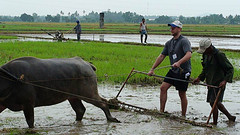
The International Rice Research Institute (IRRI) has an extensive collection of photos related to rice production, visit their collection on Flickr to learn more about their work. >>Go Now
This FARMD Featured Topic the first in a series of three related to Risk & Rice, in the lead-up to the 2012 FARMD Annual Conference: Risk & Rice in Asia.
This Featured Topic is aimed at getting the conversation started on what the major production risks facing the rice sector are globally, and what some of the available options are to manage those risks.
Featured ArticleEcologically Based Rodent Management: Reducing pest risks for farmers | Grant Singleton, International Rice Research Institute, Los Baños, Philippines
|
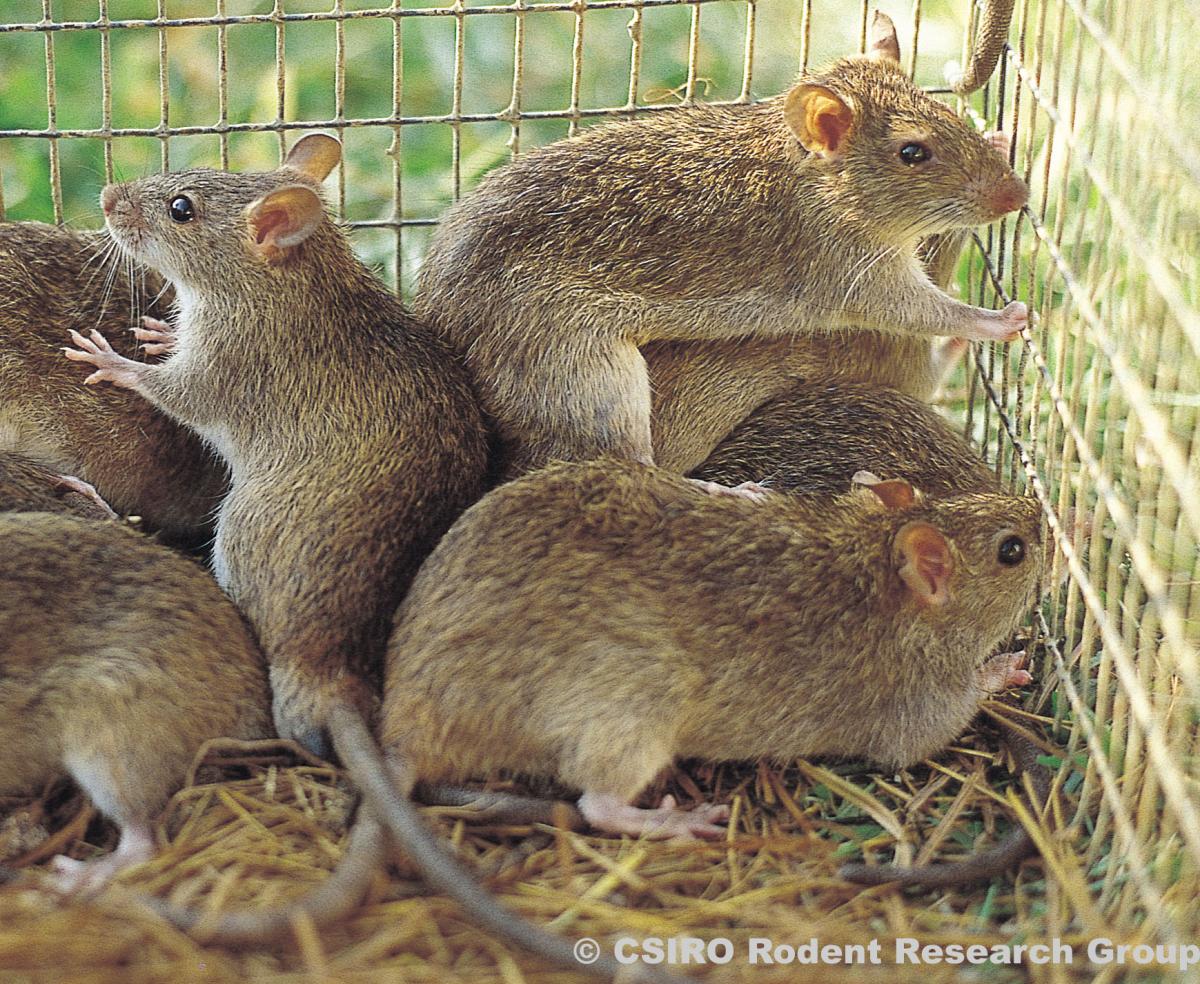 FARMD (Aug. 30, 2012) | Across Asia, pre-harvest and post-harvest losses of rice to rats are around 10-15%. A loss of 7% is enough rice to feed 245 million people—roughly the population of Indonesia—for 12 months. Smallholder farmers in developing countries generally have farm sizes ranging from 0.5-2 hectares. Rat damage is often patchy so an individual farmer may lose half of their entire rice crop to rats. This is devastating for subsistence farmers or families who rely heavily on their rice crop to educate their children.
Contributors
Risk Management in Rice Farming in Indonesia: a Pilot Project for Agricultural Insurance | Bambang Sayaka and Sahat Pasaribu, Indonesian Center for Agricultural Socio-Economic and Policy Studies (ICASEPS)
FARMD (Sep. 21, 2012) | The rice farm business in Indonesia is risky due to natural calamities, such as drought in the dry season and flood in the wet season. Pests and diseases are also main threats to rice farming. Those threats could affect the rice yields leading to lower production or, to some extent, total harvest failure (puso). Currently, the farmers have to deal with lower yields or harvest failure by themselves. Since 2011 the Government of Indonesia allocates budget to cover rice farmers’ losses due to puso. The allocated fund to cover rice puso is in accordance with Act No. 12/1992 on Crops Farming and Presidential Instruction No. 5/2011 on Securing National Rice Production in dealing with Extreme Climate.
Rice Yield Falls and Its Variability Rises under Global Warming in Southeast Asia | Man-Keun Kim, Utah State University
 FARMD (Aug. 30, 2012) | Rice yield and rice production depend on many factors such as technology, soil quality, planting practices and climate variables. Year to year rice yield and its variability due to climate variables are important sources of production risk, especially in Southeast Asia - Indonesia, Bangladesh, Thailand, Viet Nam, Myanmar, and Philippines. Most of all, the rice yield variability can be transformed into the fluctuation of the rice production and price instability which may cause high market risk to producers, consumers and trading partners.
 Production Risks and Coping Mechanisms: The Case of Rice farmers in the Upper East Region of Ghana | Seidu Al-hassan, Centre for Continuing Education and Interdisciplinary Research, University for Development Studies
FARMD (Aug. 30, 2012) | Employing the participatory method of research this paper discusses the types, nature and effects of production risks on rice production in the Upper East Region of Ghana using 440 smallholder paddy farmers. The paper also examines rice farmers’ coping strategies against rice production risks. The emphasis here is on production risk because it directly affects the technical and allocative efficiencies of farms and is more pronounced in the Upper East Region than marketing risk.
Search our Library
The FARMD Library houses several rice-related publications, articles, and document listings. To find those specifically related to production risk, click here.