

NGO (regional/international)
 Printer-friendly version
Plant Resources of Tropical Africa
Organization’s Acronym:
PROTA
Web Address:
http://www.prota.org/
Areas of Work:
Capacity building/training/research Brief summary of organization’s risk management work:
PROTA stands for Plant Resources of Tropical Africa. It is an international documentation programme on the 7,000 useful plants of Tropical Africa.
PROTA synthesizes dispersed information, makes it readily available in various forms and stimulates its use for extension, education, research, development and governance.
PROTA contributes to greater awareness and sustainable use of the world heritage of African useful plants, with due respect for traditional knowledge and intellectual property rights.
PROTA is registered as a not-for-profit Foundation in the Netherlands and as an international NGO in Kenya: one programme, two legal entities.
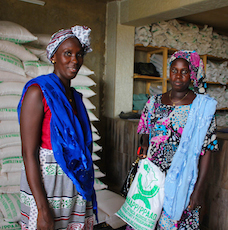
One Acre Fund
Image:

Organization’s Acronym:
OAF
Web Address:
http://www.oneacrefund.org/
Address:
1742 Tatum St., Falcon Heights
State:
MN
Zip:
55113
Areas of Work:
Insurance/re-insurance
Areas of Work:
Capacity building/training/research
Areas of Work:
Risk assessment Brief summary of organization’s risk management work:
One Acre Fund is an agriculture nonprofit that provides smallholder farmers in East Africa with the tools they need to achieve food security and increase their incomes. We currently work with 135,000 farm families in Kenya, Rwanda, and Burundi.
We use markets to eradicate hunger permanently. One Acre Fund is concentrated on one-acre subsistence farmers in Sub-Saharan Africa – one of the largest groups of "forgotten poor" in the world. We provide a complete, functioning market system – making it possible for even the poorest and most rural farmer to generate more income, and permanently solve their own hunger problem.
Contact information to be listed with profile:
Africa Rice Center
Organization’s Acronym:
AfricaRice
Web Address:
http://www.africarice.org/default.asp
Address:
Africa Rice Center (AfricaRice)
01 B.P. 2031
Cotonou
Benin
Headquarters
01 B.P. 2551
Bouaké 01,
Côte d'Ivoire
Tel. (225) 31659300
Fax (225) 31659311
Country:
Cote d'Ivoire
Areas of Work:
Other Brief summary of organization’s risk management work:
The Africa Rice Center (AfricaRice) is a leading pan-African research organization with a mission to contribute to poverty alleviation and food security in Africa through research, development and partnership activities. It is one of the 15 international agricultural research Centers supported by the Consultative Group on International Agricultural Research (CGIAR). It is also an autonomous intergovernmental research association of African member countries. The Center was created in 1971 by 11 African countries. Today its membership comprises 24 countries.
Its mission is to contribute to poverty alleviation and food security in Africa, through research, development and partnership activities aimed at increasing the productivity and profitability of the rice sector in ways that ensure the sustainability of the farming environment. The modus operandi of the Center is partnership at all levels. Its research and development activities are conducted in collaboration with various stakeholders—primarily the National Agricultural Research Systems (NARS), academic institutions, advanced research institutions, farmers’ organizations, non-governmental organizations, and donors—for the benefit of African farmers, mostly small-scale producers, as well as the millions of African families for whom rice means food.
Contact information to be listed with profile:
Head, Marketing & Communications
Savitri Mohapatra
E-mail: [email protected]
Email address:
[email protected] - Africa
- Asia
- Development
- Food Security
- nerica
- NGO (regional/international)
- Poverty
- Rice
- sustainability
- west africa
Gates Foundation
Organization’s Acronym:
Gates Foundation
Web Address:
http://www.gatesfoundation.org/Pages/home.aspx
Address:
PO Box 23350
Seattle
State:
Washington
Zip:
98102
Country:
United States
Areas of Work:
Capacity building/training/research Brief summary of organization’s risk management work:
Guided by the belief that every life has equal value, the Bill & Melinda Gates Foundation works to help all people lead healthy, productive lives. In developing countries, it focuses on improving people’s health and giving them the chance to lift themselves out of hunger and extreme poverty. In the United States, it seeks to ensure that all people—especially those with the fewest resources—have access to the opportunities they need to succeed in school and life. Based in Seattle, Washington, the foundation is led by CEO Jeff Raikes and Co-chair William H. Gates Sr., under the direction of Bill and Melinda Gates and Warren Buffett. The Gates foundation supports agricultural development because:
Approximately 1 billion people live in chronic hunger and more than 1 billion live in extreme poverty.
Many are small farmers in the developing world. Their success or failure determines whether they have enough to eat, are able to send their children to school, and can earn any money to save.
Small farmers in the developing world face many challenges:
- Their soil is often degraded from overuse.
- They lack quality seeds, fertilizer, irrigation, and other farming supplies.
- Their crops are threatened by diseases, pests, and drought.
- When small farmers do manage to grow a good crop, they frequently lack access to markets.
Funders have sharply cut their international aid to agricultural development over the past few decades.
The majority of agricultural research and technology doesn’t reach or benefit small farmers in the developing world. In sub-Saharan Africa, agriculture employs two-thirds of the population but accounts for only 4 percent of government spending.
Improvements in agriculture help people in poverty improve their lives.
When small farmers are able to get more out of their land and labor, their families eat better, earn more money, and lead healthier lives. In Asia and Latin America, improvements in rice and wheat crops several decades ago doubled yields, saved hundreds of millions of lives, and contributed to long-term economic growth. This “Green Revolution” showed it is possible to reduce hunger and poverty on a large scale but demonstrated the importance of focusing on the environment and the needs of small farmers.
Email address:
[email protected] - International/Regional development organization
- NGO (regional/international)
- Private donor or foundation
CABI
Organization’s Acronym:
CABI
Web Address:
http://www.cabi.org/default.aspx
Address:
CABI Head Office
Nosworthy Way
Wallingford
Oxfordshire
OX10 8DE
Country:
United Kingdom
Areas of Work:
Capacity building/training/research Brief summary of organization’s risk management work:
CABI is a not-for-profit science-based development and information organization focused on improve people’s lives by providing information and applying scientific expertise to solve problems in agriculture and the environment. CABI helps address the challenges of food security by helping farmers grow more and lose less. This is done by improving crop yields, safeguarding the environment, and improving access to agricultural and environmental scientific knowledge. CABI’s mission and direction are influenced by member countries that help guide the activities CABI undertakes, including scientific publishing, development projects and research, and microbial services.
Contact information to be listed with profile:
Tel: +44 (0)1491 832111
Email address:
[email protected] NENARACA
Organization’s Acronym:
NENARACA
Web Address:
http://www.nenaraca.org/About_us/about_us.html
Address:
C/O Agricultural Credit Corporation
P.O.Box 77
Amman
Country:
Jordan
Areas of Work:
Lending Brief summary of organization’s risk management work:
NENARACA is a voluntary regional association of credit institutions and agencies in the Near East and North Africa Region that deal directly or indirectly with agricultural credit operations and development. NENARACA was established on 8th December 1977 in response to a growing need among the countries of the region and for fulfillment of the recommendations by the FAO 1975 World Conference on Credit for Farmers in Developing Countries for establishing Regional Credit Associations (RACAs). NENARACA enjoys an autonomous financial and administrative status and legal entity.
Most specifically the main objectives of NENARACA are to:
- Stimulate cooperation in the fields of planning and development of financial services for rural development.
- Facilitate among its members systematic interchange of information and experiences.
- Encourage studies and organize specialized symposia to discuss issues of common interest in work functions and policies.
- Coordinate and organize training programs for upgrading agricultural credit and banking skills of the staff of member institutions.
Email address:
[email protected] - Financial institution
- Near East
- NGO (regional/international)
- North Africa
- Producer Association
- Training institution
IFDC
Organization’s Acronym:
IFDC
Web Address:
http://www.ifdc.org/
Address:
<p>P.O. Box 2040 Muscle Shoals</p>
State:
Alabama
Zip:
35662
Country:
United States
Areas of Work:
Capacity building/training/research Brief summary of organization’s risk management work:
IFDC is an international organization addressing critical issues such as international food security, the alleviation of global hunger and poverty, environmental protection, and the promotion of economic development and self-sufficiency. IFDC focuses on increasing productivity across the agricultural value chain in developing countries by creating and transferring effective and environmentally sound crop nutrient technology and agribusiness expertise. IFDC works closely with farmers, agri-input dealers and output traders, the private sector, local organizations and developing country institutions to achieve sustainable impacts that last long after projects end. IFDC has contributed to the development of institutional capacity building in 150 countries through more than 700 formal training programs, primarily as part of IFDC’s long-term agricultural development projects. Field demonstrations and training have assisted hundreds of thousands of farmers in developing countries.
An extensive list of current projects relevant to agricultural risk management can be found here.
Contact information to be listed with profile:
Telephone: +1 (256) 381 6600
Telefax: +1 (256) 381 7408
Email address:
[email protected] - Agri-business (regional/international)
- Agricultural Productivity
- Bilateral/multi-lateral
- Food Security
- International/Regional development organization
- NGO (regional/international)
- Training institution
AgriFin: Agriculture Finance Support Facility
Organization’s Acronym:
AgriFin
Web Address:
http://www.agrifinfacility.org/afsf/
Address:
1818 H Street, NW
Washington
State:
DC
Zip:
20433
Country:
United States
Areas of Work:
Capacity building/training/research
Areas of Work:
Lending Brief summary of organization’s risk management work:
AgriFin aims to support financial institutions in Africa and Asia develop scalable models of agriculture finance that benefit a large number of smallholder farmers by providing capacity building grants to these institutions. AgriFin also organizes several learning activities that build the knowledge and capacity of bankers, donors, governments, and other stakeholder. It facilitates new research and contributes to wider policy development, which will help create an enabling environment for agricultural finance.
AgriFin is a global partnership program housed within the Agricuture and Rural Development Department of the World Bank. Being housed within the World Bank allows AgriFin to leverage its work with the broad range of World Bank resources. These include completed and ongoing projects in the agriculture and financial sectors, its knowledge management and research capacity, and the partnership programs it manages, such as the Consultative Group to Assist the Poor (CGAP), Financial Sector Reform and Strengthening Intiative (FIRST), and Cities Alliance.
The overall governance of AgriFin rests with its Steering Committee, and the implementation of its activities is managed by a Program Team. The World Bank Rural Finance Adviser serves as the chairperson of the Steering Commitee and heads the Program Team. The Program Coordinator is responsible for managing program operations, with the support of two Senior Program Officers and a Knowledge Management Coordinator.
Contact information to be listed with profile:
Agriculture Finance Support Facility Room MC 5-512
The World Bank 1818 H Street, NW Washington, DC 20433
U.S.A.
Alliance for a Green Revolution in Africa
Organization’s Acronym:
AGRA
Web Address:
http://www.agra-alliance.org/content/news/detail/6...
Address:
Eden Square
Block 1, 5th Floor
P.O. Box 66773
Westlands 00800
Nairobi
Country:
Kenya
Areas of Work:
Capacity building/training/research Brief summary of organization’s risk management work:
AGRA’s integrated programs in seeds, soils, market access, policy and partnerships and innovative finance work to trigger comprehensive changes across the agricultural system. AGRA's programs also strengthen agricultural education and extension, address the issue of efficient water management, and strive to involve and train youth.
Specifically, AGRA’s Program in Africa’s Seed Systems (PASS) works to dramatically increase Africa’s capacity to breed, produce and disseminate quality seed of staple food crops such as maize, rice, cassava, beans, sorghum, millet and other staples.
Contact information to be listed with profile:
Telephone: +254 20 3750 627
ISDN Line: +254 20 3675 000
Fax Line: +254 20 3750 653
Email address:
[email protected] Access to Insurance Initiative/Multidonor Program
Organization’s Acronym:
aii
Web Address:
http://www.access-to-insurance.org/
Address:
Postfach 5180
State:
Eschborn
Zip:
65726
Country:
Germany
Areas of Work:
Insurance/re-insurance
Areas of Work:
Capacity building/training/research Brief summary of organization’s risk management work:
The Access to Insurance Initiative is a global programme designed to strengthen the capacity and understanding of insurance supervisors, to facilitate their role in expanding access to insurance markets, and to support the implementation of sound regulatory and supervisory frameworks consistent with international standards.
The goal of the Access to Insurance Initiative is to enhance broad-based, demand-oriented and sustainable access to insurance for low-income clients; thereby growing financial inclusion in the insurance sphere.
The initiative is a partnership between the International Association of Insurance Supervisors (IAIS), GTZ, FinMark Trust, the International Labour Organization, among others organizations. GTZ hosts the Secretariat.
Contact information to be listed with profile:
Telephone: +49 6196 79 6466
Email address:
[email protected]