

Africa
 Printer-friendly version
Horn of Africa Risk Transfer for Adaptation (HARITA) quarterly report: October 2010–December 2010
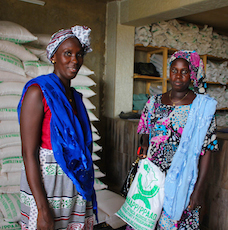
In its two years of delivery in five villages in Ethiopia, HARITA has shown promising results for replication. More than 1,300 households currently participate in HARITA, up from 200 in its first year. In large part, the success in uptake is due to a critical design element that allows the poorest farmers to pay for their insurance premiums through their labor.
Type of Risk:
All
Type of Risk management option:
Risk Transfer
Organization:
Oxfam America
Publication Date:
2011
Online Location:
http://www.oxfamamerica.org/publications/horn-of-africa-risk-transfer-for-adapta...
Number of Pages:
20
Language:
English
Region:
Africa
Country:
United States 
- Africa
- agriculture
- Ethiopia
- risk reduction
- risk reserve
- Risk Transfer
- Study/Report
- UN
- United Nations
- WFP
- World Food Programme
Farm Risk Management for Africa
Image:

Organization’s Acronym:
FARMAF
Web Address:
http://www.farmaf.org/en/
Address:
Natural Resources Institute Medway Campus
Central Avenue, Chatham Maritime
Kent ME4 4TB, United Kingdom
Country:
United Kingdom
Areas of Work:
Capacity building/training/research Brief summary of organization’s risk management work:
The Farm Risk Management for Africa (FARMAF) project aims to improve food security and livelihoods of the rural poor in Africa by enhancing smallholder farmers' access to sustainable tools and instruments to manage farm risks. FARMAF is implemented by AGRINATURA, in partnership with regional and national farmers' organisations in Africa. The project, which was launched in 2012 and has a duration of four years, is funded by the EU with counterpart funding from AGRINATURA.
The ability of farmers to anticipate, avoid, and respond to natural and economic shocks is crucial for poverty reduction, food security and indeed a viable agricultural sector. However, African farmers, smallholders in particular, often lack access to tools which can help them to manage the pre- and post-harvest risks they are faced with. FARMAF aims to make these tools and services available to smallholder farmers. By doing so, FARMAF contributes to sustainable improvements in the livelihoods of farmers in Africa.
During the launch workshop in 2012, the experiences of Burkina Faso, Tanzania and Zambia with different tools (insurance, market information systems, warehouse receipt systems and collective action) were discussed, and suggestions were made on how these can be improved and strengthened through collaboration of Regional Producers Organisations (PAFO, ROPPA, EAFF, SCAU and PROPAC), national Farmers Organisations (MWIWATA, CPF and ZNFU) and Agrinatura Research Institutes (CIRAD, NRI and WUR).
Contact information to be listed with profile:
Project coordinator Dr. Gideon Onumah
Email: [email protected]
How can we reconcile the piecemeal approaches to aflatoxin risk management in Africa?
I am just wondering how we can actually buyild partnerships and identify areas for collaboration on strategy to really tackle aftlatoxin risk in Africa? Can PACA potentially be used as a convenor of this?
Determining the nature and function of crop associated biodiversity for sustainable intensification of rice-based production systems
Region:
Global
Country:
Bangladesh
Country:
Cote d'Ivoire
Country:
Vietnam
Website Link:
http://www.dfid.gov.uk/R4D/Project/2779/Default.aspx Description:
Rice is the single most import
Project Date:
Mon, 01/03/2000
Organization:
Africa Rice Center (formerly West Africa Rice Development Association)
Bangladesh Rice Research Institute
CABI Bioscience
Imperial College at Silwood Park
Institute of Agricultural Sciences, Vietnam
International Rice Research Institute
Natural Resources International Limited
CGIAR Research Program on Climate Change, Agriculture and Food Security (CCAFS)
Region:
Global
Country:
Bangladesh
Country:
Ethiopia
Country:
Ghana
Country:
India
Country:
Kenya
Country:
Mali
Country:
Nepal
Country:
Niger
Country:
Senegal
Country:
Uganda
Country:
Tanzania
Country:
Burkina Faso
Website Link:
http://www.dfid.gov.uk/R4D/Project/60854/Default.aspx Description:
The programme is structured
Project Date:
Sun, 01/04/2009
Organization:
Africa College, University of Leeds
Africa Rice Center (formerly West Africa Rice Development Association)
Bioversity International (formerly IPGRI and INIBAP)
Canadian International Development Agency
Center for International Forestry Research
Centro Internacional de la Papa (International Potato Center)
Centro Internacional de Majaramiento de Maiz y Trigo (International Maize and Wheat Improvement Center)
Danish Aid Agency
Department for International Development
Earth System Science Partnership
European Union / European Community
Faculty of Life Sciences, University of Copenhagen
Gund Institute for Ecological Economics, University of Vermont
International Center for Tropical Agriculture
International Centre for Agricultural Research in the Dry Areas
International Crops Research Institute for Semi-Arid Tropics
International Food Policy Research Institute
International Institute of Tropical Agriculture, Nigeria
International Livestock Research Institute, Kenya
International Research Institute for Climate and Society, Columbia University
International Rice Research Institute
International Water Management Institute
Irish Aid
New Zealand Ministry of Foreign Affairs and Trade
US Agency for International Development
World Agroforestry Centre
WorldFish Center Global Headquarters (formerly International Center for Living Aquatic Resources Management - ICLARM)
- Adaptation
- Africa
- Agricultural Development
- Agricultural Policy
- agricultural sector
- agriculture
- Agroforestry
- altitude
- aluminium
- Asia
- bananas
- barley
- biodiversity
- biogeography
- Biotechnology
- carbon
- carbon cycle
- carbon dioxide
- carbon dioxide enrichment
- carbon footprint
- Carbon sequestration
- cassava
- cereals
- Climate
- Climate Change
- climate models
- climatic zones
- cloud forests
- conservation tillage
- corporate social responsibility
- costs
- cowpeas
- Crop Management
- Crop production
- crop protection
- crop residues
- crop varieties
- crop yield
- cropping systems
- crops
- decision making
- desertification
- disease control
- Drought
- drought resistance
- drought stress
- Drylands
- ecosystem services
- emissions
- Environment
- environmental degradation
- environmental management
- environmental monitoring
- Environmental services
- evapotranspiration
- Farming systems
- finance
- Financing
- Food Crops
- food production
- Food Security
- forest soils
- forestry
- fruit crops
- fungicides
- Fusarium
- gender
- gender issues
- gene expression
- genetic engineering
- genetic improvement
- genetic resources
- genotype-environment interaction
- geographical distribution
- global warming
- grassland soils
- grasslands
- greenhouse gases
- heat stress
- heat tolerance
- Hordeum vulgare
- household surveys
- humid tropics
- hybrids
- Hydrology
- indigenous fruits
- infiltration
- inheritance
- insect pests
- Insurance
- irrigation
- Juglans regia
- land degradation
- land management
- land use
- livelihoods
- Livestock
- Maize
- Manihot esculenta
- mapping
- mitigation
- models
- Monitoring
- natural resources management
- nitrogen fertilizers
- nut crops
- organic fertilizers
- Oryza sativa
- parasitic plants
- parasitic weeds
- Participatory action research
- pastoral areas
- Pastoralism
- pastoralists
- pest control
- Pesticides
- Phaseolus acutifolius
- Phaseolus coccineus
- Phaseolus vulgaris
- phenology
- photosynthesis
- Phytophthora infestans
- Plant Breeding
- plant diseases
- plant genetic resources
- Plant Genetics
- plant pathogenic fungi
- plant pathology
- plant pests
- plant protection
- plant water relations
- potatoes
- precipitation
- Private Sector
- quantitative trait loci
- rain
- rainfed farming
- reforestation
- research programmes
- Rice
- Risk Assessment
- Risk Management
- rural communities
- rural livelihoods
- seed systems
- semiarid climate
- semiarid zones
- Simulation Models
- small scale farmers
- Smallholder farmers
- smallholders
- soil degradation
- soil density
- soil management
- soil organic matter
- soil quality
- soil water
- soil water content
- solanum
- Solanum quitoense
- Solanum tuberosum
- Sorghum
- species distribution
- Striga
- Striga gesnerioides
- sulfur
- Supply Chain
- temperature
- termites
- tree crops
- trees
- Triticum aestivum
- Triticum durum
- tropical montane cloud forests
- tropics
- Vigna unguiculata
- Vitellaria paradoxa
- Vulnerability
- water availability
- water stress
- Weather
- Wheat
- wild relatives
- women
- Zea mays
CGIAR - Core funding to the Africa Rice Center (formerly West Africa Rice Development Association - WARDA)
Region:
Global
Country:
Global
Website Link:
http://www.dfid.gov.uk/R4D/Project/50105/Default.aspx Description:
The Center was founded in 1971
Project Date:
Fri, 01/04/2008
Organization:
Africa Rice Center (formerly West Africa Rice Development Association)
- Adaptation
- Africa
- agriculture
- Crop production
- crop varieties
- cropping systems
- Drought
- drought resistance
- Food Security
- gene banks
- genetic diversity
- genetic improvement
- oryza
- Plant Breeding
- plant genetic resources
- Rice
- Sustainable Agriculture
- varieties
Atmospheric dispersal of the fungal pathogens causing Black Sigatoka disease in banana and plantain
Region:
Latin America and Caribbean
Country:
Costa Rica
Country:
Uganda
Website Link:
http://www.dfid.gov.uk/R4D/Project/711/Default.aspx Description:
Little is known about the role
Project Date:
Sat, 01/11/1992
Organization:
Centro Agronomico Tropical de Investigacion Ensenanza
Natural Resources Institute
Natural Resources International Limited
- Africa
- bananas
- environmental factors
- Epidemiology of Plant Diseases and Windborne Pests
- fungal diseases
- Musa
- Mycosphaerella
- Mycosphaerella fijiensis
- Mycosphaerella musicola
- pathology
- plant diseases
- plant pathogenic fungi
- plant pathology
- plantains
- spores
- tropical fruits
- ultraviolet radiation
- winds
Adaptation of laboratory techniques for detection of Pseudomonas solanacearum for use in less developed countries
Country:
India
Country:
Kenya
Country:
Malaysia
Country:
Mauritius
Website Link:
http://www.dfid.gov.uk/R4D/Project/648/Default.aspx Description:
Bacterial wilt, caused by P.so
Project Date:
Fri, 01/10/1992
Organization:
John Innes Centre
Kenya Agricultural Research Institute
Malaysian Agricultural Research and Development Institute
Mauritius Sugar Industry Research Institute
Natural Resources Institute
Natural Resources International Limited
- Africa
- agriculture
- bacteria
- detection
- diagnosis
- East Asia and Pacific
- IPM (integrated pest management)
- pathology
- plant diseases
- plant pathology
- pseudomonas
- Pseudomonas solanacearum
- South Asia
- Training
Drought Risk Management: Practitioner's Perspectives from Africa and Asia
The Africa–Asia Drought Risk Management Peer Assistance Project seeks to facilitate the sharing of knowledge and technical cooperation among drought-prone countries in Africa and Asia and thus to promote best practices in drought risk management (DRM) for development in the two regions. In order to establish a baseline to guide this activity, the United Nations Development Programme Drylands Development Centre (UNDP DDC) undertook a stocktaking exercise between March and June 2011 on drought impacts, causes, trends and solutions in Africa and Asia.
Type of Risk:
Production related-risks
Type of Risk management option:
All
Organization:
United Nations Development Programme (UNDP)
Publication Date:
2012
Number of Pages:
35
Language:
English Training manual for pastoralists and agro-pastoralists on Index-Based Livestock Insurance
The recurrent drought has had devastating effects on pastoralists and agro-pastoralists in Kenya. Marsabit County located in the Northern part of Kenya, is one such region where pastoralist’s households have continuously experienced severe consequences of drought. Affected pastoralists are often forced to employ short term traditional drought coping strategies such as migrating with herds to other regions, distributing herds amongst their relatives and borrowing herds from clan members.
Type of Risk:
Production related-risks
Type of Risk management option:
Risk Transfer
Organization:
International Livestock Research Institute (ILRI)
Publication Date:
2011
Online Location:
http://cgspace.cgiar.org/bitstream/handle/10568/3878/ibli_trainingmanual_.pdf?se...
Number of Pages:
50
Language:
English
Region:
Global