

rural poor
 Printer-friendly version
Farm Risk Management for Africa
Image:

Organization’s Acronym:
FARMAF
Web Address:
http://www.farmaf.org/en/
Address:
Natural Resources Institute Medway Campus
Central Avenue, Chatham Maritime
Kent ME4 4TB, United Kingdom
Country:
United Kingdom
Areas of Work:
Capacity building/training/research Brief summary of organization’s risk management work:
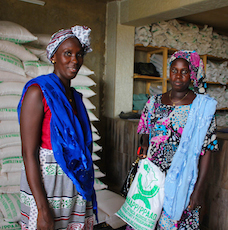
The Farm Risk Management for Africa (FARMAF) project aims to improve food security and livelihoods of the rural poor in Africa by enhancing smallholder farmers' access to sustainable tools and instruments to manage farm risks. FARMAF is implemented by AGRINATURA, in partnership with regional and national farmers' organisations in Africa. The project, which was launched in 2012 and has a duration of four years, is funded by the EU with counterpart funding from AGRINATURA.
The ability of farmers to anticipate, avoid, and respond to natural and economic shocks is crucial for poverty reduction, food security and indeed a viable agricultural sector. However, African farmers, smallholders in particular, often lack access to tools which can help them to manage the pre- and post-harvest risks they are faced with. FARMAF aims to make these tools and services available to smallholder farmers. By doing so, FARMAF contributes to sustainable improvements in the livelihoods of farmers in Africa.
During the launch workshop in 2012, the experiences of Burkina Faso, Tanzania and Zambia with different tools (insurance, market information systems, warehouse receipt systems and collective action) were discussed, and suggestions were made on how these can be improved and strengthened through collaboration of Regional Producers Organisations (PAFO, ROPPA, EAFF, SCAU and PROPAC), national Farmers Organisations (MWIWATA, CPF and ZNFU) and Agrinatura Research Institutes (CIRAD, NRI and WUR).
Contact information to be listed with profile:
Project coordinator Dr. Gideon Onumah
Email: [email protected]
Self-recruiting species in aquaculture - their role in rural livelihoods
Region:
East Asia and Pacific
Country:
Bangladesh
Country:
Cambodia
Country:
India
Country:
Vietnam
Country:
Thailand
Website Link:
http://www.dfid.gov.uk/R4D/Project/2874/Default.aspx Description:
Traditionally, aquaculture ext
Project Date:
Tue, 01/11/2000 - Sat, 01/03/2004
Organization:
Aquaculture Programme, Asian Institute of Technology
Asian Institute of Technology
Department of Fisheries, Cambodia
Department of Fisheries, Thailand
Eastern India Rain-fed farming Project
Institute of Aquaculture, University of Stirling
Marine Resources Assessment Group Limited
Natural History Museum
Practical Action (formerly Intermediate Technology Development Group), Bangladesh
Research Institute Number 1, Vietnam
Rothamsted Research
TH Huxley School, Imperial College at Silwood
Udorn Freshwater Fisheries Centre
- Aquaculture
- biomass
- carp
- Channa striata
- crabs
- cultural values
- Developing Countries
- economically disadvantaged
- exotic species
- field workers
- fish culture
- fish farming
- fish hatcheries
- fish stocks
- fisheries
- fisheries management
- fishery data
- fishery development
- fishery management
- fishery production
- fishery resources
- fishing
- freshwater fishes
- income generation
- inland fisheries
- integration
- intensification
- lagoon fisheries
- language
- length
- livelihoods
- models
- molluscs
- Monitoring
- native species
- population dynamics
- Poverty Reduction
- poverty reduction strategies
- prawns and shrimps
- project framework
- project planning
- research adaptation
- research methods
- rice field aquaculture
- rotenone
- rural communities
- Rural development
- rural livelihoods
- rural poor
- shrimp culture
- snails
- stock assessment
- stocking density
- Sustainable Development
- sustainable livelihoods
- tilapia
Rural Livelihoods Monitoring
Region:
South Asia
Country:
Bangladesh
Website Link:
http://www.dfid.gov.uk/R4D/Project/60902/Default.aspx Description:
The Rural Livelihood Progra
Project Date:
Sat, 01/12/2002
Organization:
BETS Consulting Services Ltd
ITAD Limited
Social Development Direct
Socioconsult Ltd
Technical Assistance to Non-Governmental Organizations
- action research
- agricultural research
- agriculture
- aquatic resources
- Capacity Building
- civil society
- civil society organizations
- communication process
- communities
- community participation
- community-based management
- community-based organizations
- conflict management
- Contracts
- Crop production
- crops
- decision making
- demand
- donors
- economic analysis
- economics
- educational quality
- efficiency
- empowerment
- Evaluation
- Extension
- extension activities
- extension services
- Farm Power and Machinery
- Farmer Field Schools
- fish farming
- fisheries
- fisheries management
- fishery policy
- fishery resources
- Food Security
- gender equality
- gender equity
- gender issues
- gender relations
- good governance
- governance
- government
- grants
- higher education
- home gardens
- human resource development
- human resources
- impact
- impact assessment
- inland fisheries
- innovation
- institutional capacity
- institutional development
- institutional reform
- institutions
- landless poor
- leadership
- lessons learned
- livelihood security
- mainstreaming
- Management
- marginal farms
- Monitoring
- Monitoring and evaluation
- national government
- natural resources management
- networks
- NGOs (non-governmental organizations)
- organizational change
- organizational development
- organizations
- Oryza sativa
- outsourcing
- participation
- partnerships
- Policy
- Poverty
- poverty analysis
- power relations
- Private Sector
- project design
- public sector
- recruitment
- research programmes
- research projects
- resource management
- Rice
- rights of women
- rural livelihoods
- rural poor
- skills training
- small farms
- social capital
- social structure
- strategic planning
- strategy development
- sustainability
- teaching standards
- Training
- universities
- women
Pro-Poor Policy Options to Control Highly Pathogenic Avian Influenza (HPAI) in Africa and South East Asia
Region:
Global
Country:
Cambodia
Country:
Ethiopia
Country:
Ghana
Country:
Indonesia
Country:
Kenya
Country:
Nigeria
Country:
Vietnam
Country:
Thailand
Website Link:
http://www.dfid.gov.uk/R4D/Project/60508/Default.aspx Description:
Since its emergence, H5N1 HPAI
Project Date:
Mon, 01/01/2007
Organization:
Food and Agriculture Organisation of the United Nations
International Development Research Centre
International Food Policy Research Institute
International Livestock Research Institute, Kenya
Royal Veterinary College
Rural Development Research Consortium
- agriculture
- animal diseases
- animal health
- avian influenza
- avian influenza virus
- birds
- Capacity Building
- Certification
- chickens
- child health
- child nutrition
- chronic poverty
- communicable diseases
- communication
- communication policy
- communication process
- compensation
- consumer behaviour
- consumers
- cost benefit analysis
- costs
- data provision
- databases
- decision making
- decision support
- decision support tools
- Disasters
- disease control
- disease surveillance
- disease transmission
- disease vectors
- ducks
- econometric models
- economic analysis
- Economic Development
- Economic Growth
- economic impact
- economics
- epidemics
- epidemiology
- Epidemiology and Modelling
- farm income
- farmers
- farmers income
- Farming systems
- field experimentation
- Food Quality
- Food Safety
- Food Security
- health
- health policy
- households
- human health
- human nutrition
- infant nutrition
- information dissemination
- information flow
- institutional issues
- livelihood impact
- livelihood security
- Livelihood strategies
- livelihoods
- Livestock
- livestock production
- losses
- mapping
- Market Access
- Marketing
- meat products
- micronutrients
- models
- policy issues
- poultry
- poultry farming
- Poverty
- Poverty Reduction
- project evaluation
- project management
- project monitoring
- project planning
- public health
- quality assurance
- research methods
- research projects
- Rice
- Risk
- Risk analysis
- Risk Assessment
- Risk factors
- Risk Management
- risk reduction
- rural income
- rural livelihoods
- rural poor
- small farmers
- Smallholder farmers
- smallholders
- socioeconomic impact
- stakeholders
- Supply Chain
- surveys
- sustainable livelihoods
- urban areas
- vaccination
- Value Chain
- Vulnerability
- willingness to pay
Pilot study of a database of technologies as a tool to support agricultural extension to improve livelihoods of poorer people in Bangladesh
Region:
South Asia
Country:
Bangladesh
Website Link:
http://www.dfid.gov.uk/R4D/Project/3032/Default.aspx Description:
The public extension service s
Project Date:
Thu, 01/11/2001
Organization:
Department of Agricultural Extension Education, Bangladesh Agricultural University
Department of Agricultural Extension, Agricultural Services Innovation and Reform Project Khambari
Department of International Extension & Rural Development, University of Reading
HTSPE Limited
Poverty Elimination Through Rice Research Assistance Project
Pra Promoters Society Bangladesh
PROSHIKA
Rothamsted Research
- Aquaculture
- databases
- extension services
- farmers
- improved livelihoods
- information
- integrated crop management
- knowledge
- livelihoods
- manuals
- poultry
- rice field aquaculture
- rural livelihoods
- rural poor
- rural services
- small farmers
- small farms
- stakeholders
- surveys
- Technology transfer
Land property rights interventions for increasing agricultural productivity in developing countries: a systematic review.
Region:
Global
Country:
Global
Website Link:
http://www.dfid.gov.uk/R4D/Project/60866/Default.aspx Organization:
Global Governance Institute
- Agricultural Production
- agriculture
- land rights
- productivity
- property rights
- rural poor
- systematic review
- women
Improving access to natural capital for the rural poor in contexts of uncertainty: Institutions, governance and policy processes
Region:
Africa
Country:
Mozambique
Country:
South Africa
Country:
Zimbabwe
Website Link:
http://www.dfid.gov.uk/R4D/Project/2454/Default.aspx Description:
The SL approach focusses atten
Project Date:
Tue, 01/04/2000
Organization:
Centre for African Studies/Land Tenure Centre, University of Eduardo Mondlane
Institute of Development Studies, University of Sussex
Institute of Environmental Studies, University of Zimbabwe
Overseas Development Group, School of Development Studies, University of East Anglia
Overseas Development Institute
Programme for Land and Agrarian Studies, University of the Western Cape
Rural Livelihoods Department, Department for International Development (UK)
- agrarian reform
- Agricultural Policy
- agriculture
- boreholes
- community forest management
- community forestry
- community involvement
- community management
- community participation
- community-based management
- decentralization
- democratization
- Diversification
- dry farming
- Economic Development
- Economic Growth
- forest resources
- forestry
- forests
- game
- Government Policy
- institutional issues
- integrated water resources management
- irrigated farming
- irrigation schemes
- land access
- land ownership
- land policy
- land reform
- land resources
- land rights
- land tenure
- Livelihood Diversification
- local governance
- local government
- natural resources
- natural resources management
- nature conservation
- Policy
- policy issues
- Policy Reform
- political reform
- Poverty
- poverty alleviation
- Poverty Reduction
- Private Sector
- private sector development
- private sector participation
- pro-poor interventions
- pro-poor policy
- pro-poor tourism
- protected areas
- right of access
- rural areas
- rural communities
- Rural development
- rural livelihoods
- rural poor
- rural population
- rural poverty
- rural tourism
- small farmers
- small scale farmers
- smallholders
- sustainable livelihoods
- tourism
- tourism development
- village councils
- villages
- water access
- water management
- water policy
- water resources
- water rights
- wildlife conservation
- wildlife management
Improved agricultural rural transport for Kenya
Region:
Africa
Country:
Ghana
Country:
Kenya
Country:
Uganda
Website Link:
http://www.dfid.gov.uk/R4D/Project/3059/Default.aspx Description:
It is evident in Kenya that a
Project Date:
Fri, 01/04/2002
Organization:
Department of Agricultural Engineering, Swedish University of Agricultural Sciences
Development Technology Unit, School of Engineering, University of Warwick
International Forum for Rural Transport and Development
Kenya Network for Draught Animal Technology
Natural Resources International Limited
Silsoe Research Institute
- agriculture
- air pollution
- animal welfare
- bicycles
- Candida albicans
- Capacity Building
- Case Studies
- Climate
- community management
- community-based management
- community-based organizations
- Credit
- Crop production
- Development
- donkeys
- Economic Growth
- engineering
- environmental factors
- focus groups
- Food Security
- gender
- GIS (geographical information systems)
- horticulture
- households
- Infrastructure
- irrigation schemes
- labour
- livelihoods
- mapping
- markets
- non-motorized transport
- peri-urban areas
- peri-urban communities
- Policy
- Poverty
- poverty alleviation
- questionnaires
- resources
- Rice
- rural areas
- Rural development
- rural poor
- rural poverty
- rural services
- rural transport
- situational analysis
- smallholders
- social capital
- socioeconomics
- soil erosion
- stakeholders
- Technology
- technology development
- topography
- transport
- transport planning
- trends
- vulnerable groups
- water pollution
- workshops
Harvest Plus Challenge Programme (HPCP)
Region:
Global
Website Link:
http://www.dfid.gov.uk/R4D/Project/60687/Default.aspx Description:
In late 2002, the CGIAR Micron
Project Date:
Fri, 01/04/2008
Organization:
Learning Innovations at WestEd
- Adaptation
- Aegilops
- agriculture
- amino acids
- analytical methods
- animal nutrition
- Arabidopsis thaliana
- arsenic
- ascorbic acid
- backcrossing
- bananas
- barley
- Beans
- bioavailability
- biofortification
- bioinformatics
- biosynthesis
- Biotechnology
- Brassica rapa
- breast feeding
- breeding methods
- cadmium
- calcium
- carbon dioxide
- carotenes
- carotenoids
- cassava
- cereals
- chemical analysis
- chemical composition
- child health
- child nutrition
- chronic illness
- communicable diseases
- composition
- consumers
- cooking
- copper
- cowpeas
- crop models
- Crop production
- crop varieties
- crop yield
- cropping systems
- crops
- cyanogens
- detoxification
- Developing Countries
- diet
- diet studies
- dietary surveys
- disease prevention
- disease resistance
- drought resistance
- drought stress
- drying
- enzymes
- fatty acids
- fermentation
- ferritin
- Fertilizers
- flours
- food composition
- Food Crops
- food preparation
- Food Prices
- food processing
- Food Products
- Food Quality
- food resources
- Food Safety
- Food Security
- food storage
- gene expression
- genes
- genetic diversity
- genetic engineering
- genetic improvement
- genetic mapping
- genetic markers
- genetic transformation
- genetic variation
- genotype-environment interaction
- germplasm resources
- Glycine max
- GMO (Genetically Modified Organisms)
- Grain
- grain crops
- health
- heritability
- heterosis
- Hordeum vulgare
- household surveys
- human diseases
- human nutrition
- hybrids
- infant mortality
- infant nutrition
- intercropping
- introduced varieties
- inulin
- Ipomoea batatas
- iron
- landraces
- Maize
- malaria
- malnutrition
- manganese
- Manihot esculenta
- Medicago truncatula
- micronutrients
- mineral content
- mineral deficiencies
- modelling
- molecular genetics
- Molecular markers
- Musa
- mutants
- nitrogen
- nitrogen fertilizers
- nutrient analysis
- nutrient intake
- nutrient uptake
- nutrients
- nutritive value
- Opuntia ficus-indica
- oryza
- Oryza sativa
- parboiling
- pearl millet
- Pennisetum glaucum
- Phaseolus
- Phaseolus coccineus
- Phaseolus vulgaris
- phosphorus
- phytic acid
- pigs
- Plant Breeding
- plant diseases
- plant genetic resources
- Plant Genetics
- plant nutrition
- plantains
- postharvest decay
- postharvest losses
- postharvest physiology
- potatoes
- protein content
- proteins
- public health
- quantitative trait loci
- recurrent selection
- Rice
- root crops
- rural poor
- Sampling methods
- seed development
- seed production
- seed supply
- seed systems
- Seeds
- selenium
- Simulation Models
- Solanum phureja
- Solanum tuberosum
- solar drying
- Sorghum
- Soybeans
- spectrometers
- spectroscopy
- Storage
- storage losses
- sulfur
- sweet potatoes
- sweetcorn
- tannins
- temperature
- tomatoes
- toxicity
- trace elements
- transgenic plants
- translocation
- triticale
- Triticum
- Triticum aestivum
- Triticum durum
- tubers
- Vigna unguiculata
- vitamin A
- vitamin deficiencies
- vitamins
- Wheat
- wild relatives
- willingness to pay
- women
- Zea mays
- zinc
- zinc fertilizers
Future Agricultures Consortium (FAC) Phase 2
Region:
Africa
Website Link:
http://www.dfid.gov.uk/R4D/Project/60706/Default.aspx Description:
Future Agricultures Consort
Organization:
Centre for Development, Environment and Policy, School of Oriental and African Studies, University of London
Institute of Development Studies, University of Sussex
Overseas Development Institute
- access to education
- access to health care
- Agricultural Development
- agricultural economics
- agricultural inputs
- agricultural land
- Agricultural Marketing
- Agricultural Policy
- Agricultural Production
- agricultural research
- agriculture
- analysis
- analytical methods
- Biotechnology
- Capacity Building
- Case Studies
- cash crops
- cassava
- cereals
- chronic poverty
- Climate
- Cocoa
- Coffee
- commercialization
- companies
- consumers
- Cotton
- Crop production
- crop varieties
- crops
- dairy farming
- decentralization
- Developing Countries
- development policy
- donors
- Economic Development
- Economic Growth
- economic reform
- estimation
- exports
- Extension
- extension activities
- extension services
- famine
- farmers
- farmers associations
- farmers attitudes
- Farmers Organizations
- farming
- farmland
- Fertilizers
- fisheries
- food
- Food Aid
- Food Crops
- Food Prices
- food production
- Food Security
- foods
- foreign aid
- gender
- gender issues
- GMO (Genetically Modified Organisms)
- governance
- government
- greenhouse gases
- growth
- household surveys
- Hunger
- improved livelihoods
- innovation
- innovation adoption
- investments
- irrigated cropping
- irrigation
- labour productivity
- land
- land management
- land reform
- land resources
- literature reviews
- livelihood security
- Livelihood strategies
- livelihoods
- Livestock
- livestock farmers
- living standards
- Maize
- markets
- millet
- models
- natural resources
- new technologies
- NGOs (non-governmental organizations)
- onions
- pastoral areas
- Pastoralism
- pastoralists
- performance
- plant biotechnology
- Plant Breeding
- plant breeding methods
- Policy
- policy development
- policy formulation
- politics
- Poverty
- Poverty Reduction
- prices
- Private Sector
- pro-poor policy
- productivity
- projects
- public sector
- reform
- Research
- rural areas
- rural communities
- Rural development
- rural economy
- rural livelihoods
- rural poor
- rural poverty
- school feeding
- schools
- seasonal variation
- seasonality
- seed industry
- seed production
- seed supply
- seed systems
- Seeds
- service delivery
- small farmers
- small farms
- Smallholder farmers
- smallholders
- social equity
- social protection
- Sorghum
- Subsidies
- surveys
- sustainable livelihoods
- tea
- Technology
- tomatoes
- urban poor
- welfare
- yams
- youth