

Food Security
 Printer-friendly version
The impact of natural hazards and disasters on agriculture and food and nutrition security
Nearly a quarter of damages wrought by natural disasters on the developing world are borne by the agricultural sector according to initial results from a new FAO study released at the 2015 UN World Conference for Disaster Risk Reduction. Twenty-two percent of all damages inflicted by natural hazards such as drought, floods storms or tsunamis are registered within the agriculture sector, FAO's analysis of 78 post-disaster needs assessments in 48 developing countries spanning the 2003-2013 period shows. These damages and losses are often incurred by poor
Type of Risk:
Production related-risks
Type of Risk management option:
All
Organization:
FAO
Publication Date:
2015
Online Location:
http://www.fao.org/3/a-i4434e.pdf
Number of Pages:
16
Language:
English
Document:

Publications Link:
- Climate Change
- Climate Change
- Conference Report
- disaster management
- Food and Agriculture Organization of the United Nations (FAO)
- Food Security
- Natural Disaster
Farm Risk Management for Africa
Image:

Organization’s Acronym:
FARMAF
Web Address:
http://www.farmaf.org/en/
Address:
Natural Resources Institute Medway Campus
Central Avenue, Chatham Maritime
Kent ME4 4TB, United Kingdom
Country:
United Kingdom
Areas of Work:
Capacity building/training/research Brief summary of organization’s risk management work:
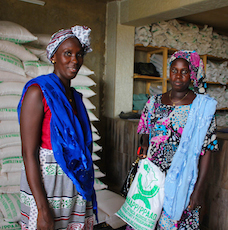
The Farm Risk Management for Africa (FARMAF) project aims to improve food security and livelihoods of the rural poor in Africa by enhancing smallholder farmers' access to sustainable tools and instruments to manage farm risks. FARMAF is implemented by AGRINATURA, in partnership with regional and national farmers' organisations in Africa. The project, which was launched in 2012 and has a duration of four years, is funded by the EU with counterpart funding from AGRINATURA.
The ability of farmers to anticipate, avoid, and respond to natural and economic shocks is crucial for poverty reduction, food security and indeed a viable agricultural sector. However, African farmers, smallholders in particular, often lack access to tools which can help them to manage the pre- and post-harvest risks they are faced with. FARMAF aims to make these tools and services available to smallholder farmers. By doing so, FARMAF contributes to sustainable improvements in the livelihoods of farmers in Africa.
During the launch workshop in 2012, the experiences of Burkina Faso, Tanzania and Zambia with different tools (insurance, market information systems, warehouse receipt systems and collective action) were discussed, and suggestions were made on how these can be improved and strengthened through collaboration of Regional Producers Organisations (PAFO, ROPPA, EAFF, SCAU and PROPAC), national Farmers Organisations (MWIWATA, CPF and ZNFU) and Agrinatura Research Institutes (CIRAD, NRI and WUR).
Contact information to be listed with profile:
Project coordinator Dr. Gideon Onumah
Email: [email protected]
Climate risk and food security in Senegal: Analysis of climate impacts on food security and livelihoods
Food security is highly sensitive to climate risks in Senegal. Recent climate-related events, specifically the 2011/2012 drought, have highlighted the impact of droughts and floods on food production, access to markets, and livelihoods. However, the ways in which specific vulnerabilities are linked to climate have not been well studied. The purpose of this analysis was to quantitavely and qualitatively assess climate impacts (climate variability, change, and extremes) on food security and livelihoods.
Type of Risk:
All
Publication Date:
2014
Number of Pages:
48
Language:
English
Region:
Africa
Country:
Senegal aWhere, Inc.
Organization’s Acronym:
aWhere
Web Address:
http://www.awhere.com
Address:
Wheat Ridge
State:
Denver, CO
Zip:
80033
Country:
Global
Areas of Work:
Weather risk management
Areas of Work:
Other Brief summary of organization’s risk management work:
aWhere, Inc. is a data management company who has created a web based location intelligence platform, which provides visualization and data analysis tools to help organizations manage risk. Additionally, the Platform offers free, interactive access to weather data, which enables agricultural practitioners to better manage risk and make evidence-based decisions based on historical, current day, and forecasted weather data and weather alerts.
Contact information to be listed with profile:
Lizzy Leighty
Communications and Marketing, aWhere, Inc.
[email protected]
Email address:
[email protected] - agriculture
- data management
- Food Security
- Monitoring and evaluation
- Service provider/consulting company
- Weather
What are the projected impacts of climate change on food crop productivity in Africa and South Asia?
Region:
Global
Website Link:
http://www.dfid.gov.uk/R4D/Project/60788/Default.aspx Description:
Food security is one of thi
Organization:
Cranfield University
- agriculture
- agroclimatic zones
- cassava
- Climate
- Crop production
- crop yield
- crops
- Environment
- Food Crops
- Food Security
- impact assessment
- Maize
- millet
- plantains
- Rice
- Sorghum
- Sugarcane
- Sustainable Agriculture
- systematic review
- Wheat
- yams
- yields
Water and Food Challenge Programme
Region:
Global
Country:
Brazil
Country:
Japan
Country:
Philippines
Country:
Sweden
Country:
Uganda
Country:
United States of America
Website Link:
http://www.dfid.gov.uk/R4D/Project/60685/Default.aspx Description:
In developing countries, wa
Project Date:
Tue, 04/01/2008
Organization:
Challenge Program on Water and Food Secretariat
- agricultural land
- agricultural research
- agriculture
- Agroforestry
- Aquaculture
- aquifers
- biodiversity
- Capacity Building
- catchment hydrology
- civil society
- Climate
- climate models
- communicable diseases
- communication policy
- communication process
- communications strategy
- community participation
- community-based management
- conflict management
- conflict resolution
- Constraints
- cost benefit analysis
- Crop Management
- Crop production
- cropping systems
- crops
- customary law
- dams
- decision making
- decision support
- decision support systems
- decision support tools
- Development
- disease transmission
- disease vectors
- Drought
- ecosystem services
- ecosystems
- electricity
- electricity generation
- energy
- environmental management
- Environmental services
- Evaluation
- farmer participatory research
- Farming systems
- Financing
- fish culture
- fish management
- fisheries
- fisheries management
- fishery development
- fishery management
- fishery resources
- fishing communities
- flood plains
- floodplain management
- floodplains
- Food Crops
- food production
- Food Security
- gender equity
- geological surveys
- geology
- GIS (geographical information systems)
- Globalization
- governance
- grazing lands
- Groundwater
- groundwater abstraction
- health
- human nutrition
- hydroelectric schemes
- hydrological models
- Hydrology
- impact
- impact assessment
- implementation
- inland fisheries
- innovation adoption
- institutional change
- institutional issues
- institutional management
- institutions
- integrated management
- integrated water resources management
- Investment
- investments
- irrigated farming
- irrigation
- irrigation schemes
- knowledge
- lakes
- land management
- land use
- livelihood impact
- livelihoods
- Livestock
- livestock farming systems
- livestock production
- malaria
- modelling
- models
- Monitoring and evaluation
- mosquito-borne diseases
- mosquitoes
- natural resources
- natural resources management
- Oryza sativa
- outcome assessment
- parasitic diseases
- Pastoralism
- pastoralists
- Payment for environmental services
- Plant Breeding
- ponds
- Poverty
- poverty alleviation
- Poverty Reduction
- precipitation
- project evaluation
- public health
- public investment
- rain
- rainfed farming
- rainwater
- research programmes
- research projects
- research results
- research uptake
- Rice
- rice field aquaculture
- river basins
- rivers
- rural livelihoods
- saline soils
- salinity
- shrimp culture
- Simulation Models
- small farmers
- Smallholder farmers
- smallholders
- soil
- soil analysis
- soil classification
- soil conservation
- soil fertility
- soil surveys
- sustainability
- Sustainable Agriculture
- sustainable livelihoods
- Trade
- upland rice
- upper catchments
- urban agriculture
- wastewater
- wastewater irrigation
- Water
- water access
- water allocation
- water availability
- water conflict
- water conservation
- water demand
- water development
- Water harvesting
- water law
- water management
- water policy
- water productivity
- water quality
- water reservoirs
- water resources
- water scarcity
- water security
- water storage
- water supply
- water systems
- Water use
- watershed management
- watersheds
- wetlands
- Wheat
- whole catchment management
Sustainable management and molecular characterisation of Bemisia tabaci and tomato leaf curl virus disease (ToLCVD) on tomato in India (Phase II)
Region:
South Asia
Country:
India
Website Link:
http://www.dfid.gov.uk/R4D/Project/2292/Default.aspx Description:
In India, tomato is both a hig
Project Date:
Sat, 01/09/1999
Organization:
Natural Resources Institute
Natural Resources International Limited
- agriculture
- Bemisia tabaci
- crop losses
- disease resistance
- environmental factors
- Food Security
- health
- high yielding varieties
- insect vectors
- insecticides
- livelihoods
- Lycopersicon esculentum
- Plant Breeding
- plant diseases
- plant viruses
- poor farmers
- tomato leaf curl virus
- tomatoes
Sweet potato cultivars with improved keeping qualities for East Africa
Region:
Africa
Country:
Tanzania
Website Link:
http://www.dfid.gov.uk/R4D/Project/2390/Default.aspx Description:
The major needs addressed by t
Project Date:
Mon, 01/11/1999
Organization:
Centro Internacional de la Papa, Kenya
Crops Research, Ukiriguru Agricultural and Training Research Institute
Natural Resources Institute
Natural Resources International Limited
Silsoe College, Cranfield University
- biochemistry
- carbohydrate metabolism
- Constraints
- consumer behaviour
- consumer surveys
- crop varieties
- drought stress
- enzymes
- farmers
- food processing
- Food Quality
- Food Security
- handling
- histology
- income generation
- Ipomoea batatas
- keeping quality
- lignification
- literature reviews
- mannitol
- Marketing
- markets
- on-farm research
- organoleptic properties
- osmotic pressure
- pest insects
- pest resistance
- Plant Breeding
- postharvest
- postharvest decay
- postharvest losses
- postharvest physiology
- relative humidity
- roots
- rots
- selection
- Storage
- storage losses
- storage physiology
- storage structures
- stored products pests
- stores
- surveys
- sweet potatoes
- transport
- tropics
- urban areas
- varieties
- variety trials
- ventilation
- wounds and injuries
Sustainable Integrated Management of Whiteflies as Pests and Vectors of Plant Viruses in the Tropics: Phase 2 - Network Strengthening, Pest and Disease Dynamics and IPM Component Research
Region:
Africa
Country:
Colombia
Country:
Ecuador
Country:
El Salvador
Country:
Guatemala
Country:
Uganda
Country:
Tanzania
Website Link:
http://www.dfid.gov.uk/R4D/Project/3029/Default.aspx Description:
This proposal seeks funds from
Project Date:
Thu, 01/04/2001
Organization:
Agricultural Research Service, USDA
Centro Internacional de Agricultura Tropical, Colombia
Centro Nacional de Tecnologia Agricola, El Salvador
Danforth Center
Ford Foundation
International Institute of Tropical Agriculture, Nigeria
Makerere University
Manecur
National Root Crops Co-ordinator, Sugarcane Research Institute, Tanzania
Natural Resources Institute
Natural Resources International Limited
New Zealand Ministry of Foreign Affairs and Trade
Office for Foreign Disaster Assistance, USAID
PROFRIJOL, Guatemala
Tel Aviv University
University of Arizona
- agriculture
- Beans
- Bemisia tabaci
- biotypes
- cash crops
- cassava
- Climate
- crop losses
- crop protection
- disease resistance
- disease vectors
- environmental effects
- Food Security
- geminiviruses
- health hazards
- insect pests
- insect vectors
- insecticides
- introduced varieties
- IPM (integrated pest management)
- Ipomoea batatas
- livelihoods
- Lycopersicon esculentum
- Manihot esculenta
- natural enemies
- pest control
- pesticide resistance
- Pesticides
- Phaseolus
- plant diseases
- plant viruses
- poor farmers
- small farmers
- subsistence farming
- Sustainable Agriculture
- sweet potatoes
- tomatoes
- Trialeurodes vaporariorum
- whiteflies
Sustainable Agriculture Research for International Development (SARID)
Region:
Global
Country:
Global
Website Link:
http://www.dfid.gov.uk/R4D/Project/60112/Default.aspx Description:
The scheme is one of the ne
Project Date:
Sat, 01/07/2006 - Thu, 01/07/2010
Organization:
Africa Rice Center (formerly West Africa Rice Development Association)
African Insect Science for Food and Health
All-India Co-ordinated Pearl Millet Improvement Project
Biotechnology and Biological Sciences Research Council
CABI Africa Regional Centre
Centro Internacional de la Papa (International Potato Center)
Food and Environment Research Agency, UK
Institute of Grassland and Environmental Research
International Crops Research Institute for Semi-Arid Tropics
International Institute of Tropical Agriculture, Uganda
International Rice Research Institute
John Innes Centre
Kenya Agricultural Research Institute
Laurentian University
Makerere University
National Agricultural Research Organisation (Uganda)
Natural Resources Institute
NIAB (formerly National Institute of Agricultural Botany)
Oil Palm Research Institute, Ghana
Rothamsted Research
Sokoine University of Agriculture
University of Aberdeen
University of Calcutta
University of Cambridge
University of Cape Coast, Ghana
University of Lancaster
University of Leeds
University of Nairobi
University of Nottingham
University of Sheffield
University of the Free State
University of Warwick
- Agricultural Production
- agriculture
- armyworms
- arsenic
- bananas
- biological control
- biological control organisms
- biopesticides
- Biotechnology
- Brassica oleracea var. capitata
- Brassica oleracea var. viridis
- cabbages
- cereals
- coconuts
- cocos nucifera
- Crop production
- crop science
- crop varieties
- disease control
- disease resistance
- drought resistance
- Food Security
- foods
- fungi
- gene expression
- genes
- genetics
- groundwater pollution
- Ipomoea batatas
- kale
- Maize
- Musa
- nuclear polyhedrosis virus
- Oryza sativa
- parasitic plants
- pearl millet
- Pennisetum glaucum
- pest insects
- Plant Breeding
- plant diseases
- plant nematodes
- plant pests
- plantains
- Poverty Reduction
- Resistance
- Rice
- rots
- soil pollution
- Sustainable Agriculture
- sweet potatoes
- Triticum
- Triticum aestivum
- weed control
- weeds
- Wheat