

Study/Report
 Printer-friendly version
Horn of Africa Risk Transfer for Adaptation (HARITA) quarterly report: October 2010–December 2010
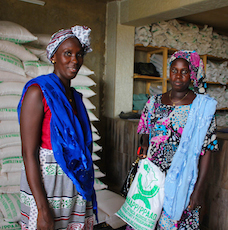
In its two years of delivery in five villages in Ethiopia, HARITA has shown promising results for replication. More than 1,300 households currently participate in HARITA, up from 200 in its first year. In large part, the success in uptake is due to a critical design element that allows the poorest farmers to pay for their insurance premiums through their labor.
Type of Risk:
All
Type of Risk management option:
Risk Transfer
Organization:
Oxfam America
Publication Date:
2011
Online Location:
http://www.oxfamamerica.org/publications/horn-of-africa-risk-transfer-for-adapta...
Number of Pages:
20
Language:
English
Region:
Africa
Country:
United States 
- Africa
- agriculture
- Ethiopia
- risk reduction
- risk reserve
- Risk Transfer
- Study/Report
- UN
- United Nations
- WFP
- World Food Programme
Malawi Economic Monitor, May 2016: Absorbing Shocks, Building Resilience
Type of Risk management option:
Risk Reduction/Mitigation
Organization:
World Bank
Online Location:
https://openknowledge.worldbank.org/handle/10986/24587
Number of Pages:
38
Language:
English
Region:
Africa
Country:
Malawi
Document:
Publications Link:
Rwanda Economic Update: Managing Uncertainty for Growth and Poverty Reduction, With a Special Focus on Agricultural Sector Risk Assessment
Entitled "Managing Uncertainty for Growth and Poverty Reduction: Agriculture Sector Risk Management," the report reveals that growth projections in Rwanda depend heavily on the performance of the agriculture sector. The special focus section assesses the different risks to Rwanda's agriculture sector, prioritizes them according to their frequency and severity of impact, and identifies areas of risk management solutions that need deeper specialized attention.
Type of Risk:
Production related-risks
Type of Risk management option:
Risk Reduction/Mitigation
Organization:
World Bank
Publication Date:
2015
Number of Pages:
74
Language:
English
Region:
Africa
Country:
Rwanda - agriculture; developing countries; crop; risk management; small farmers; risk financing;
- Drought risk management
- Food crop
- Rwanda
- Study/Report
Braving the Uncertainties of Weather: Weather index-based insurance as agriculture risk transfer mechanism for climate change adaptation and risk reduction in the Philippines
This paper scoped three pilot models of weather index-based insurance (WII) that are initiated separately by both the private sector and by PCIC (as part of ILO-supported project on innovative agricultural financing). The early experiences of different stakeholders who have piloted and implemented WII in the country have shown that it can be an effective risk transfer instrument that can complement other proactive climate change adaptation and disaster risk reduction strategies.
Type of Risk:
Production related-risks
Type of Risk management option:
Risk Transfer
Organization:
Oxfam
Publication Date:
2012
Online Location:
http://www.oxfamblogs.org/philippines/oxfam-reads
Number of Pages:
50
Language:
English
Region:
East Asia and Pacific
Country:
Philippines Publications Link:
http://www.oxfamblogs.org/philippines/oxfam-reads
Promoting Risk Financing in the Asia Pacific Region: Lessons from Agriculture Insurance in Malaysia, Philippines and Vietnam
There is a growing consensus among development community that the risk insurance can provide an effective risk management tool for mitigating the impacts of climatic and non-climatic disasters. Several risk insurance initiatives have been implemented at grassroots level for reducing the vulnerability of communities to disasters in most of the countries in Asia and the Pacific over the years.
Type of Risk:
Production related-risks
Type of Risk management option:
Risk Transfer
Organization:
APAN
Publication Date:
2013
Number of Pages:
45
Language:
English
Region:
East Asia and Pacific Climate risk and food security in Senegal: Analysis of climate impacts on food security and livelihoods
Food security is highly sensitive to climate risks in Senegal. Recent climate-related events, specifically the 2011/2012 drought, have highlighted the impact of droughts and floods on food production, access to markets, and livelihoods. However, the ways in which specific vulnerabilities are linked to climate have not been well studied. The purpose of this analysis was to quantitavely and qualitatively assess climate impacts (climate variability, change, and extremes) on food security and livelihoods.
Type of Risk:
All
Publication Date:
2014
Number of Pages:
48
Language:
English
Region:
Africa
Country:
Senegal A Comparative Study of Risk Management in Agriculture under Climate Change
Climate change affects the mean and variability of weather conditions and the frequency of extreme events, which to a great extent determines the variability of production and yields. This paper reviews the scientific literature on the impacts of climate change on yield variance and investigates their implications for the demand of crop insurance and effectiveness of different farm strategies and policy measures using crop farm data in Australia, Canada and Spain.
Type of Risk:
Production related-risks
Type of Risk management option:
Risk Transfer
Organization:
OECD
Publication Date:
2012
Online Location:
http://www.oecd-ilibrary.org/agriculture-and-food/a-comparative-study-of-risk-ma...
Number of Pages:
89
Language:
English
Country:
Global Featured: A probabilistic approach to assess agricultural drought risk
The probabilistic approach to drought risk assessment in this study consists of conducting a frequency analysis of the gaps between water demand and availability in the crop root zone during the crop season, constructing appropriate drought vulnerability models, and deriving loss exceedance curves and return period losses for selected crops in drought prone countries of Africa.
Type of Risk:
Production related-risks
Type of Risk management option:
Risk Reduction/Mitigation
Organization:
UNISDR, FEWS NET
Publication Date:
2013
Number of Pages:
21
Language:
English
Region:
Africa Review of FSD's Index Based Weather Insurance Initiatives
Type of Risk:
Production related-risks
Organization:
The Kenya Financial Sector Deepening (FSD) programme
Publication Date:
2013
Number of Pages:
50
Language:
English
Region:
Africa
Country:
Kenya Aflatoxin control strategies in the groundnut value chain in Ghana
Groundnut is an import cash crop in Ghana and an essential component of the diet of many Ghanaians. In 2009, Ghanaian farmers produced 495,000 metric tonnes of groundnuts on 346,900 ha. Production tripled between 1995 and 2005 (Yaw et al. 2008). Groundnut is grown throughout the country, but is most important in the two regions of the north, Northern and Upper East, where about a fifth of farmers name groundnut as one of their two most important crops.
Type of Risk:
Market-related risks
Organization:
International Food Policy Research Center (IFPRI)
Publication Date:
2013
Online Location:
http://www.ifpri.org/sites/default/files/publications/gsspwp33.pdf
Number of Pages:
14
Language:
English